Shandong Taixing Advanced Material Co., Ltd.
News

Why Do High-End Electronic Materials Have to Use Precipitation Method Aluminum Hydroxide?

2026-03-09 0 Leave me a message

In high-end electronic fields such as semiconductor packaging, high-frequency substrates, thermal interface materials, and advanced ceramic substrates, every microscopic characteristic of the material directly determines the performance boundary and reliability limit of the end product. When traditional mineral raw materials and mechanically prepared aluminum hydroxide cannot meet the nanometer level precision requirements, precipitation method aluminum hydroxide has become an indispensable strategic basic material in high-end electronic application design due to its unparalleled purity, controllable morphology, and interface consistency.


I. Extreme requirements for high-end electronic materials: paradigm shift from 'usable' to 'essential'

High end electronic applications impose almost stringent core requirements on filling or functional materials, which directly defines the screening criteria for aluminum hydroxide:

1. Ultimate purity: The content of sodium (Na⁺), potassium (K⁺), chloride ions (Cl⁻), and heavy metal impurities should be controlled at the single digit ppm level to avoid ion migration causing circuit corrosion, dielectric loss surge, or catalytic degradation of polymer materials.

2. Nanoscale size and narrow distribution: It is required that the primary particle size can be precisely controlled within the range of 20-200 nanometers, and the distribution index (PDI) is less than 0.2 to ensure true nanoscale dispersion in the polymer matrix, avoiding stress concentration and performance fluctuations caused by aggregates.

3. Accurate morphology and crystal plane control: It is necessary to design it in a spherical, hexagonal or cubic shape according to the application orientation to optimize rheological properties, thermal conductivity path or reduce dielectric constant.

4. Customizable surface chemistry: The surface hydroxyl density, acidity, and reactive sites must be controllable to achieve perfect chemical coupling with organic resins or ceramic precursors.

Aluminum hydroxide produced by traditional mechanical crushing or mineral purification methods has inherent defects that cannot be overcome in any of the above dimensions, while precipitation provides a systematic solution from the synthesis source.


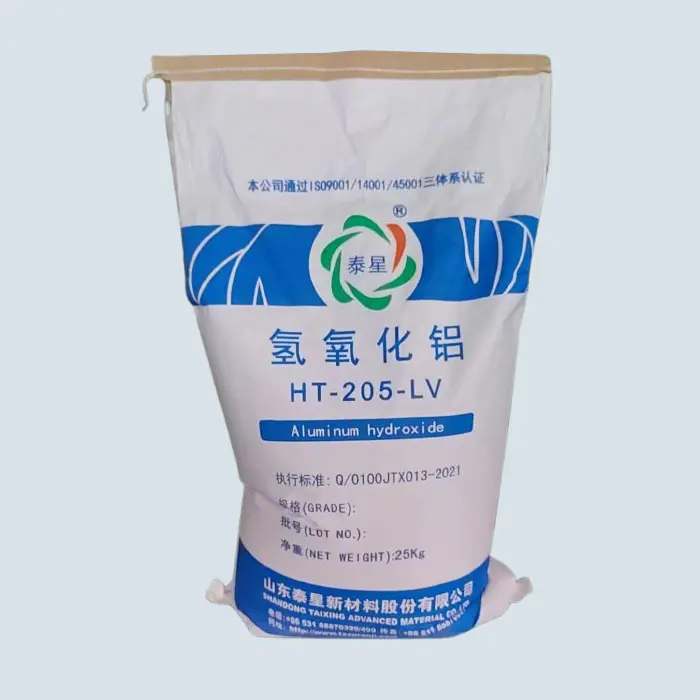
Aluminum Hydroxide


Ⅱ. Precipitation process: from molecular self-assembly to precise material manufacturing

The precipitation method is a "bottom-up" synthesis technique that involves the liquid-phase reaction of aluminum salts (such as aluminum sulfate and aluminum chloride) with alkaline precipitants (ammonia water and sodium hydroxide) under controlled conditions, and the direct construction of aluminum hydroxide particles from the atomic/molecular level through nucleation growth maturation processes. Its core advantage lies in the "source design" of the intrinsic properties of materials.

1. Implementation path of extreme purity

·Raw material refinement and process isolation: high-purity aluminum foil or aluminum alcohol is used as the starting material to eliminate mineral impurities from the source. The entire process is carried out in a closed and corrosion-resistant reactor to avoid the introduction of metal ions.

·purification: After the reaction, a combination of multi-stage countercurrent washing, membrane filtration, and electrodialysis technologies can efficiently remove reaction by-products (such as Na ₂ SO ₄, NH ₄ Cl) and free ions, and stabilize the total impurity metal content below 10 ppm.

·Phase change purification: By precisely controlling the calcination rehydration process and utilizing the differentiation effect of different impurity ions during the crystal phase transition, secondary purification is achieved.

2. Precise control mechanism of size and morphology

The essence of precipitation method lies in its absolute control over crystallization kinetics:

·Explosive nucleation (LaMer model): Through instantaneous mixing under ultra-high supersaturation, synchronous generation of all crystal nuclei is achieved, which is a prerequisite for obtaining monodisperse nanoparticles.

·Growth inhibition and orientation: Adding specific crystal surface inhibitors (such as citric acid, tartaric acid) or surfactants (such as CTAB) to selectively inhibit the growth rate of specific crystal surfaces through molecular adsorption, thereby programmable preparation of spherical (isotropic growth inhibition) or regular hexagonal sheet-like (directional growth) nanocrystals.

·Reactor Engineering: Using a continuous flow microreactor, the mixing efficiency, residence time, and temperature gradient can be precisely controlled to ensure the consistency of particles in each batch at the nanoscale, achieving perfect scaling up from laboratory to ton scale production.


Ⅲ. The Irreplaceability of Precipitation Method Aluminum Hydroxide in Key Electronic Applications

1. High frequency and high-speed copper-clad laminate (CCL) and chip packaging materials

In the 5G/6G millimeter wave frequency band, the transmission loss of signals mainly comes from dielectric loss (Df). The precipitation method of aluminum hydroxide exhibits unique advantages:

·Low dielectric constant and loss: Ultra high purity avoids the relaxation response of polar impurities to the electric field; Spherical nanoparticles can effectively reduce the polarization and interfacial free volume at the filler resin interface, achieving lower Df (as low as 0.002 @ 10 GHz).

·Excellent coefficient of thermal expansion (CTE) matching: By adjusting the particle size and filling amount, the CTE of resin and silicon chip can be accurately matched, preventing delamination or cracking during thermal cycling. It is a key material for advanced packaging such as Fan Out and 2.5D/3D packaging.

2. Thermal Interface Material (TIM) and Encapsulation Adhesive

With the soaring power density of chips, thermal management has become a bottleneck. The precipitation method product is the cornerstone of building an efficient thermal conductivity network:

·Low interface thermal resistance: Nano spherical particles can achieve higher filling density and more uniform distribution in silicone oil or resin matrix, forming more phonon conduction pathways. Realize covalent bonding with the substrate, greatly reducing interface phonon scattering.

·Excellent electrical insulation: extremely high volume resistivity (>10 ¹⁵Ω· cm).


Ⅳ. Comparative analysis: precipitation method vs. traditional method

performance dimension Precipitation method for aluminum hydroxide Mechanical/Mineral Aluminum Hydroxide
Purity (Na ⁺ content) < 50 ppm,customizable < 10 ppm usually > 1000 ppm
Primary particle size and distribution 20-200 nm,Monodisperse(PDI < 0.2) Micro scale, wide distribution, with hard agglomeration present
Uniformity of morphology Highly organized and customizable (spherical/sheet-like, etc.) Irregular and angular
Surface chemical state Clean, uniform, controllable hydroxyl activity, easy functionalization Complex, contaminated by mineral sources and crushing processes, with uncontrollable activity
Dispersion in resin Truly nanoscale dispersion, forming stable composite materials Easy to settle and aggregate, becoming a source of defects
Influence of dielectric properties Extremely low, can optimize high-frequency performance Impurities and interfaces lead to a significant increase in dielectric loss


Conclusion: Cognition from Cost Considerations to Value Creation

In the high-end electronics industry, the cost structure of materials has shifted from a simple "unit price/kilogram" to "performance value/gram". Although the production cost of aluminum hydroxide by precipitation method is higher than that of traditional products, the system performance improvement, yield improvement, and reliability leap it brings make its comprehensive cost-effectiveness far superior to the latter.

It is not just a filler, but an advanced structural unit designed through molecular engineering with specific functional genes. Its value lies in providing electronic materials engineers with a pure, controllable, and designable 'material platform', making it possible to achieve synergistic optimization of dielectric, thermal, mechanical, and thermal expansion properties through composite material design.Therefore, choosing the precipitation method for aluminum hydroxide is a future oriented technological route and reliability guarantee. It represents the transition from the era of "screening" relying on natural mineral properties to the era of "synthesis" actively designing intrinsic properties of materials, which undoubtedly serves as the underlying driving force for continuous innovation in high-end electronic materials.


Related News
Leave me a message
X
We use cookies to offer you a better browsing experience, analyze site traffic and personalize content. By using this site, you agree to our use of cookies. Privacy Policy
RejectAccept