Shandong Taixing Advanced Material Co., Ltd.

About Us

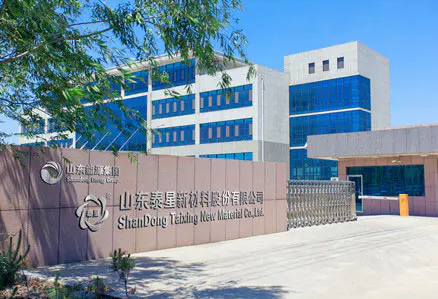
Shandong Taixing Advanced Material Co., Ltd.

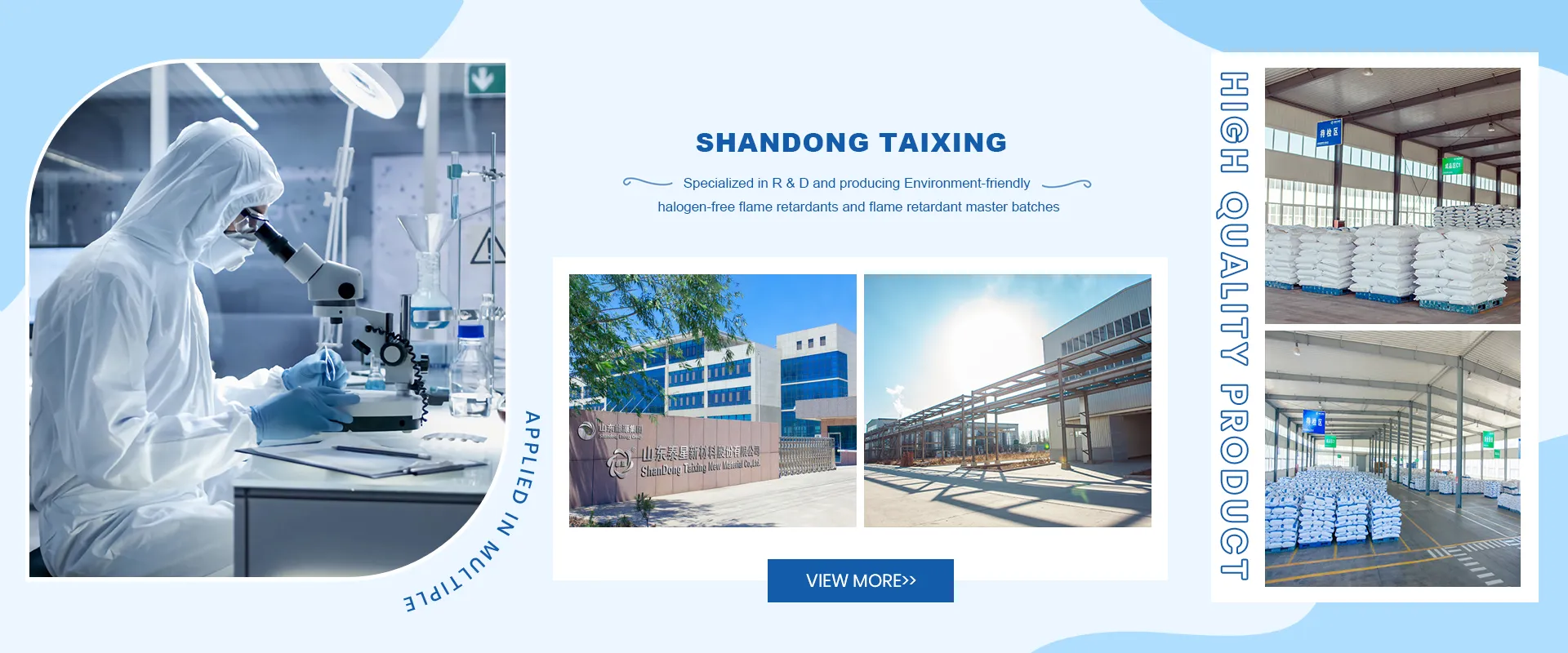
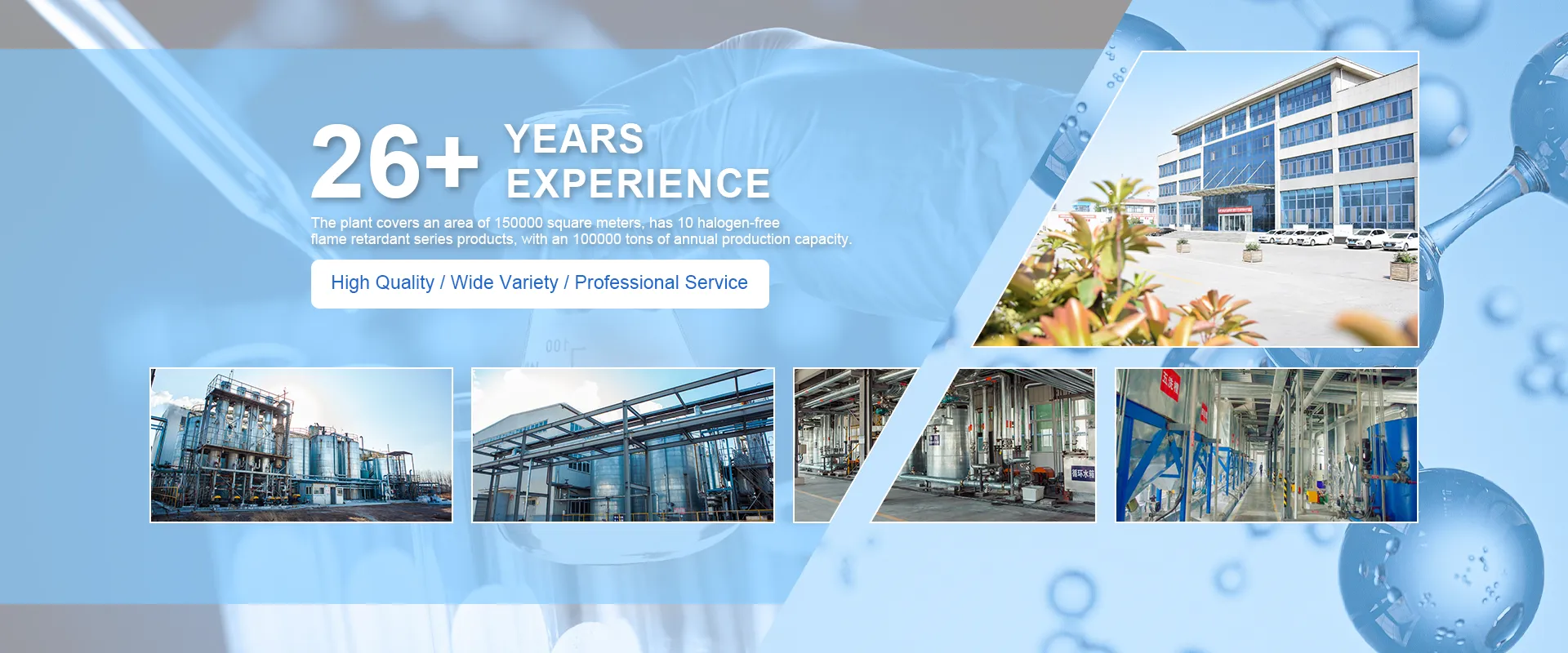
Shandong Taixing Advanced Material Co., Ltd., was established in 1998, a national high-tech enterprise, specialized in R&D and producing environment-friendly halogen-free flame retardants and flame retardant master batches. including zinc borate, ultrafine aluminum hydroxide, melamine cyanurate (MCA), aluminum hypophosphite (AP), aluminum hydroxide, magnesium hydroxide (MDH), flame retardant master batch and specialized flame retardant for GF reinforced PBT, PA and TPU.

About us

Product Category

Zinc Borate
Zinc Borate

Zinc borate, an inorganic compound composed of zinc, boron, and oxygen, is one of the flame retardants offered by Taixing. We can provide different types of it, mainly based on the different water of crystallization contents. You can choose from various structural forms of zinc borate, including anhydrous , monohydrated , and 3.5-hydrated types, just according to your actual needs.


What Parameters of Zinc Borate Do We Mainly Need to Focus On?

1. Chemical Composition Content

Actually, when discussing this issue, several points need to be determined based on the type of zinc borate, including the chemical composition content. For example, 3,5-hydrated zinc borate, this common and popular product from Taixing, contains approximately 37% zinc oxide, 48% boron trioxide, and about 15% water of crystallization. But we can also offer the anhydrous type, the proportions become approximately 77-78% zinc oxide, 22-23% boron trioxide, and no water of crystallization.

2. Loss on Combustion (LOI)

This parameter is highly correlated with the chemical composition above. Hydrated zinc borate has a LOI of 14%-16%, while anhydrous zinc borate has ≤1% because it lacks water of crystallization.

3. Dehydration Temperature

This also varies between different types of zinc borate. When we customize a formula for you, if the polymer processing temperature is in the medium to low temperature range, a hydrated type can be selected, with a dehydration range of 290-330 degrees Celsius. But if you want to use it in a high-temperature engineering plastic, we will recommend you choose the anhydrous type, with a thermal stability temperature exceeding 400 degrees Celsius.

4. Particle Size

The mainstream range for zinc borate is D50: 2-10 μm. For a finer particle size, please contact Taixing for customized formulation.


How Stable Is This Flame Retardant over the Long Term?

From a long-term use perspective, zinc borate is certainly a very reliable flame retardant. We recommend this type of product because of its excellent weather resistance and stability. It has extremely low solubility in water, and as an inorganic salt, unlike organic ones, it does not experience significant chain breakage or rapid performance degradation. The particle structure is stable, and it remains inert in contact with polymer systems, without adverse reactions. Furthermore, the flame-retardant effect of zinc borate does not significantly decrease over its entire service life, so you can use it with confidence.


How to Store and Handle Zinc Borate?

When you wholesale a batch of zinc borate from us, you will face the issues of its transportation and storage. Taixing will arrange reliable transportation and make preparations for rain and moisture protection during transportation. When you are preparing a warehouse for it, please make sure that the environment is dry, cool and well ventilated. Although zinc borate has good stability, it is still necessary to avoid long-term exposure to high temperature and high humidity environments. In particular, the hydrated type is slightly more prone to absorbing moisture than the anhydrous type.

Once opened, use as soon as possible. Before adding, pre-disperse or pre-mix with the main flame retardant and add in batches, do not add all at once.


Melamine Cyanurate
Melamine Cyanurate

Established in 1998, Taixing is a manufacturer and supplier of various flame retardants . We can provide melamine cyanurate, a halogen-free flame retardant that promotes char formation and reduces smoke during combustion. It provides highly effective flame retardancy even at low dosages and is highly recommended for industries with high safety standards.


How Does MCA Achieve Its Flame-Retardant Effect?

During the heating process, melamine cyanurate undergoes a strong endothermic decomposition reaction, which carries away a large amount of heat, slowing down the temperature rise of the material. This can be understood as a cooling process.

When the temperature continues to rise, MCA will release non-flammable gases such as ammonia and nitrogen, which dilutes the concentration of oxygen and flammable gases and has an inhibitory effect on the intensity of combustion. Then, the nitrogen-containing structure generated after its decomposition can form a dense and stable carbon layer. The inside and outside of the carbon layer are separated from each other, so oxygen and heat cannot enter, and the combustibles inside will not continue to escape. The dripping of burning liquid droplets can also be controlled, reducing the risk of secondary fires.


From a Polymer System Perspective, What Are the Applications of Melamine Cyanurate?

The most mature and widely used polymer system for MCA is the PA nylon system. For PA 6 and PA 66, it exhibits good dispersibility and strong migration resistance. During flame retardation, it decomposes to produce inert gases and promotes char formation, achieving a UL94 V-0 rating even at relatively low addition levels.

The second type of polymer system for which we recommend MCA is PBT/PET engineering plastics. Using halogenated flame retardants may lead to material embrittlement; switching to a halogen-free flame retardant system can solve this problem, and it also results in low smoke and low toxicity.

Furthermore, for PP/PE modified flame retardant systems, melamine cyanurate can be used synergistically with other flame retardants to promote a denser expanded char structure, inhibit dripping, and reduce smoke density, resulting in a stronger flame retardant effect.

Epoxy resins and polyurethanes can also utilize this type of flame retardant. Therefore, whether considering the polymer system or the industry itself, MCA has a wide range of applications. If you are unsure, you can contact us with your specific situation and let Taixing customize a solution for you.


Aluminum Hydroxide

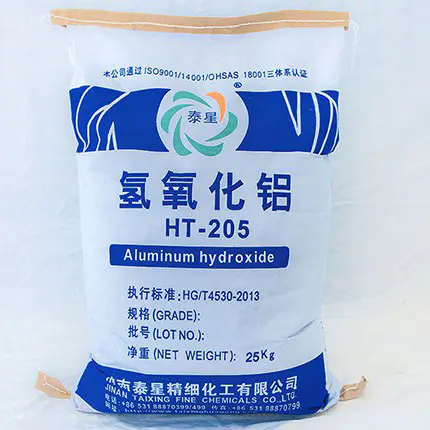
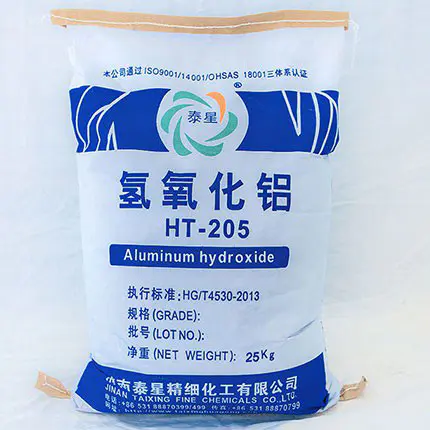
You can confidently purchase aluminum hydroxide from Taixing , or contact us for customized flame retardant formulations. It is a multifunctional substance with the chemical formula Al(OH)₃, serving as a raw material and processing aid in numerous manufacturing processes, and is one of the types of flame retardants we can provide.


How Does Aluminum Hydroxide Function as a Flame Retardant?

The flame retardant process of ATH also begins with thermal decomposition, starting at approximately 200–220°C. This process consumes a significant amount of heat, delaying the time it takes for the polymer to reach its ignition point. As decomposition continues, it releases a large amount of water vapor. Due to the water vapor, the concentration of oxygen and combustible gases at the combustion site decreases, reducing the contact efficiency between the flame and the substrate, thus slowing the spread of the flame.

The residue after the decomposition of aluminum hydroxide is stable alumina, which forms a dense, high-temperature resistant inorganic protective layer. In the later stages of the flame retardant process, it provides continuous heat insulation and flame suppression. From the start of its decomposition to its continued flame-retardant effect, it does not produce corrosive gases such as hydrogen halides, has low toxicity, produces little smoke, and is environmentally friendly.


What Particle Size Specifications of ATH Can We Provide?

The particle size of ATH cannot be chosen arbitrarily. It must be determined based on different processing techniques, product thickness, and performance requirements. Taixing can provide customized solutions, and of course, we can also provide flame retardants with different particle sizes. Please bring your specific requirements to discuss with us.

ATH with a standard particle size of 5–10 μm is widely used in the market. It disperses stably during mixing, extrusion, and calendering, and has good flowability, making it a relatively cost-effective choice. If you have higher requirements for surface finish and mechanical properties, we recommend choosing particles with smaller diameters, such as 2–5 μm. This will result in a more uniform distribution and better interfacial bonding compared to the previous type.

Taixing can also provide ultrafine ATH with a particle size of 1–2 μm.


Technical Performance Data

Parameter Fine Grade Ultra-fine Grade
D50 Particle Size (μm) 8 ± 2 1.5 ± 0.5
Specific Surface Area (m²/g) 6-8 10-12
Whiteness (%) ≥96 ≥97
Ignition Loss (%) 34.5 ± 0.5 34.5 ± 0.5
SiO2 Content (%) ≤0.03 ≤0.02
Fe2O3 Content (%) ≤0.02 ≤0.01
More
More
Aluminum Hypophosphite

Aluminum hypophosphite, with the chemical formula Al(H₂PO₂)₃, is a white crystalline powder. It is also a highly effective flame retardant in the polymer field. Taixing welcomes you to contact us to purchase this type of product. Through a condensed phase mechanism, it promotes char formation and reduces the release of combustible gases during thermal decomposition. Its high phosphorus content is a key factor in its high flame retardancy.


Applications, Uses, and Storage

Aluminum hypophosphite can be used in a variety of polymer composites, including polyamides, polyesters, epoxy resins, and polyurethanes. We can customize formulations to meet your specific processing needs and desired flame retardant system.

In electronic and cable applications, including but not limited to insulation materials, circuit board laminates, and cable sheaths, it helps meet the UL 94 V-0 safety standard and is also a good flame retardant choice.

Other areas such as textiles and coatings, and it is commonly used in interior decoration, curtains, and the backing coating of protective clothing. If you have any other questions that you would like to confirm regarding the suitability of using aluminum hypophosphite, please feel free to contact us.

For the addition and storage processes, please use it as soon as possible after opening, and make sure your operators wear protective equipment to prevent dust from harming the human body. The processing area should also be well ventilated. Unused products should be kept away from strong oxidants and other incompatible substances, and please do not put them in environments with prolonged high temperature and humidity. They should be stored in a cool, dry, and well-ventilated place.


Can Aluminum Hypophosphite Be Mixed with Other Flame Retardants?

Yes, and we can provide synergistic flame retardant formulations. The specific combination depends on the type of flame retardant and the material system used.

For example, when mixed with aluminum hydroxide (ATH), both are halogen-free flame retardants. ATH decomposes endothermally and releases water vapor to lower the ignition source temperature, while AP releases acidic substances through phosphate ions to promote charring and expansion. We will provide a suitable combination scheme based on the specific circumstances.

It can also be considered for mixing with melamine cyanurate , where the effects are complementary.

When combined with brominated flame retardants, in addition to improved flame retardant performance, the overall halogen content can be reduced, resulting in improved environmental friendliness.


More
More

Featured Products

X
We use cookies to offer you a better browsing experience, analyze site traffic and personalize content. By using this site, you agree to our use of cookies. Privacy Policy
RejectAccept