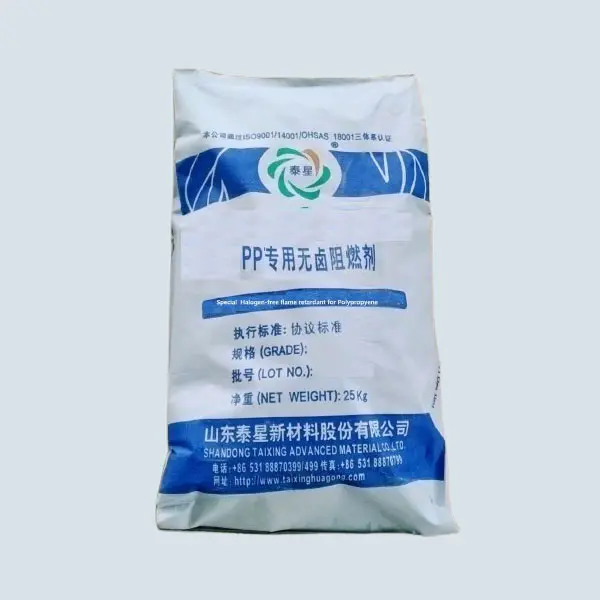
As a halogen-free, low smoke, low toxicity, and environmentally friendly flame retardant technology route, the Intumescent Flame Retardant System (IFR) has been widely used in the field of polymer materials such as polyolefins (PP/PE), thermoplastic elastomers, epoxy sealants, coatings, polyurethanes, cable sheaths, etc. It is the mainstream choice under global green flame retardant regulations (RoHS, REACH, UL, IEC) due to its flame retardant mechanism of thermal expansion into carbon and forming a heat-insulating and oxygen insulating hard carbon layer.
However, in practical working conditions such as high humidity, immersion in water, rain, condensation, and underground/underwater service, conventional expansion flame retardant systems commonly suffer from fatal problems such as water solubility migration, moisture absorption and weight gain, carbon layer water absorption and collapse, decreased flame retardant rating, deterioration of insulation performance, and mechanical performance degradation, directly leading to flame retardant failure of materials in long-term humid and hot environments, component scrapping, and increased safety risks. Therefore, water resistance has become a core indicator for measuring whether the expansion flame retardant system can meet long-term reliable applications in outdoor, underwater, and high humidity environments.
A typical expansion flame retardant system consists of three parts: acid source, carbon source, and gas source. When heated, a synergistic reaction occurs to achieve flame retardancy:
1. Acid source (dehydration catalyst): mostly phosphorus containing compounds, decompose and release inorganic acids/phosphoric acid substances at high temperatures, catalyze the dehydration of the substrate and carbon source into carbon;
2. Carbon source (carbonization agent): polyhydroxy carbon rich compounds that rapidly form a continuous and dense three-dimensional carbon skeleton under acid catalysis;
3. Gas source (foaming agent): High temperature decomposition releases non combustible gases such as NH3, N ₂, H ₂ O, which cause the carbon layer to expand and foam, forming a porous thermal insulation and oxygen barrier expanded carbon layer.
This carbon layer can block heat transfer, isolate oxygen diffusion, suppress droplets, reduce smoke release, and achieve high flame retardant levels such as V-0 and 5VA.
Conventional IFR has poor water resistance, which is essentially due to high component polarity, strong water solubility, weak interfacial bonding, and irreversible damage under the action of water/moisture
1. Water soluble precipitation of small molecule components: Traditional components such as melamine, pentaerythritol, and ammonium polyphosphate (common APP) have high water solubility, and after long-term immersion in water, they migrate and dissolve towards the surface of the material, causing an imbalance in the proportion of flame retardant system components and losing their synergistic effect;
2. Swelling and collapse of expanded carbon layer: The carbon layer generated by combustion contains hydrophilic groups inside. When it comes into contact with water, the pores absorb water, the structure softens and disintegrates, losing its thermal and oxygen insulation ability, and the risk of reignition increases significantly;
3. Matrix interface debonding: Flame retardants form water gaps at the filler matrix interface after absorbing water, reducing mechanical properties such as tensile strength, elongation at break, and bending modulus, while improving dielectric loss and reducing insulation resistance;
4. Surface precipitation whitening and frosting: Water soluble flame retardants migrate to the surface of the product, causing appearance defects, decreased coating adhesion, poor electrical contact, and other problems, directly leading to product failure in the fields of electronics, cables, and outdoor building materials.
Differentiated selection based on working conditions, taking into account the demands of mainstream global terminal markets:
-Characteristics of working conditions: long-term exposure to sunlight and rain, high and low temperature humidity, high voltage insulation requirements;
-Selection requirements: Ultra water-resistant microcapsule encapsulated IFR, polymerization degree APP ≥ 2000, reactive carbon forming agent, no precipitation after 72 hours of immersion, UL94 V-0 retention, volume resistivity ≥ 10 ¹⁶Ω· cm, low smoke halogen-free (LSFH).
-Characteristics of working conditions: high humidity, condensation water, contact with coolant, and thermal shock;
-Selection requirements: Moisture resistant migration type IFR, excellent compatibility with PP/TPU matrix, no frosting or flame retardant failure after long-term aging at 125 ℃ and condensation cycles.
-Characteristics of working conditions: long-term immersion, high humidity, and microbial environment;
-Selection requirements: Coating grade water-resistant and flame-retardant system, good film-forming properties with resin, coating does not peel off after soaking, carbon layer does not hydrolyze, and meets building fire protection A-level/UL certification.
-Characteristics of working conditions: high humidity, condensation, and strict electrical insulation requirements;
-Selection requirements: Low ion migration, water-resistant IFR, extremely low water solubility, no deterioration of insulation performance after immersion in water, avoiding the risk of leakage and short circuit.
1. Misconception 1: Only focus on the initial flame retardant rating and ignore the retention rate after wet and hot conditions
Initial V-0 does not equal long-term reliability, and flame retardancy degradation after immersion is the most common failure mode for outdoor/high humidity products.
2. Misconception 2: Believing that the higher the amount added, the better the water resistance
Excessive addition will reduce the compatibility of the matrix and instead exacerbate interfacial water absorption and migration. It is necessary to find the optimal addition ratio between flame retardant efficiency and water resistance.
3. Misconception 3: Ordinary apps can be easily modified to meet water resistance requirements
Even with surface modification, low molecular weight APP will still slowly absorb moisture and hydrolyze under long-term humid and hot conditions. Therefore, a dual technology path of high polymerization and microcapsule encapsulation must be adopted.
4. Misconception 4: Neglecting electrical performance and appearance requirements
In the fields of electronics and appearance components, the migration of flame retardants can lead to surface whitening and poor contact, and zero precipitation water-resistant IFR must be selected.
Against the backdrop of rapidly growing demand for high-end manufacturing and outdoor, underwater, and high humidity conditions worldwide, water resistance is no longer an optional bonus, but a necessary threshold for the entry of flame retardant systems into the high-end market. The scientific selection of water-resistant expansion flame retardant systems must be comprehensively evaluated from five dimensions: component structure design, water-resistant precipitation testing, retention rate of flame retardant/mechanical/electrical properties after wet heat aging, scenario and working condition matching, and global regulatory compliance, rather than relying solely on initial flame retardant data.
For material companies and terminal product manufacturers, choosing a professional customized water-resistant expansion flame retardant system can significantly improve the long-term reliability and safety level of products in high growth global markets such as new energy, outdoor infrastructure, automobiles, and communication electronics, reduce failure risks, and strengthen brand international competitiveness. In the future, high water resistance, low migration, halogen-free and efficient expansion flame retardant technology will become the mainstream development direction and core competitive track in the global field of green flame retardant materials.