Shandong Taixing Advanced Material Co., Ltd.
News

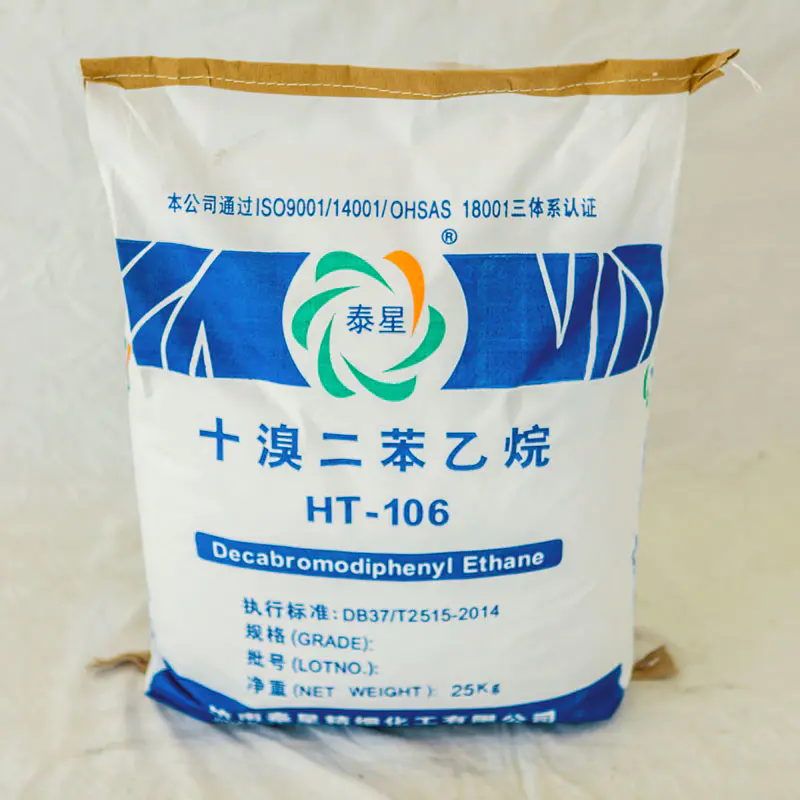
What Is the Thermal Decomposition Temperature of Decabromodiphenyl Ethane?

2026-01-08 0 Leave me a message

The thermal decomposition temperature of decabromodiphenyl ethane (DBDPE) is one of the core process and performance parameters for its efficient flame retardant, which directly determines its processing window, flame retardant efficiency, and behavior mode in polymers during fire. However, a simple temperature value can often lead to misunderstandings - the decomposition of DBDPE does not occur at a precise melting point, but rather follows a continuous process of complex reaction kinetics under controlled experimental conditions. This article will go beyond a single data point and systematically analyze the essence, key influencing factors, and practical application guidance of its thermal decomposition behavior from the perspective of thermal analysis science.


I. Core data: Decomposition temperature range under thermogravimetric analysis (TGA)

In standardized thermogravimetric analysis testing, a heating rate of 10°C/min is usually used for measurement under a nitrogen or air atmosphere, which is the benchmark method for evaluating its thermal stability.

Authoritative data conclusion:

·Onset Temperature (Tₒₙₛₑₜ): The starting point of thermal weight loss of DBDPE usually occurs between 340°C and 360°C. This temperature point marks the significant thermal cracking of its molecular structure, releasing bromine radicals.

·Maximum decomposition rate temperature (Tₘₐₓ, corresponding to DTG peak): Under a nitrogen atmosphere, the temperature point with the fastest decomposition rate is about 390°C to 410°C. At this temperature, the decomposition reaction of DBDPE is most intense.

·Decomposition temperature range: Its main decomposition stage (weight loss rate >5% to <95%) spans a wide temperature range, approximately extending from 340°C to 450°C.

Key interpretation: The high thermal stability exhibited by DBDPE is one of its main advantages over traditional decabromodiphenyl ether (DecaBDE). Its decomposition temperature is significantly higher than the processing temperature of most common plastics (such as PP, HIPS, ABS) (usually 180-280 ° C), which ensures that DBDPE can maintain chemical stability during conventional processing and will not decompose prematurely, leading to equipment corrosion or material performance degradation.


China Decabromodiphenyl Ethane Supplier


II. The scientific essence of thermal decomposition behavior: multi-step reaction kinetics

The thermal decomposition of DBDPE is not a one-step process, but a complex continuous/parallel reaction process, mainly including:

1. Homolysis of C-Br bonds: Under the action of heat, C-Br bonds with relatively low energy levels in the molecule first undergo homolysis, generating bromine radicals (Br ·) and aryl radicals. This is the initial step of flame retardancy, and the released Br · is the key active species for subsequent gas-phase flame retardancy.

2. Molecular rearrangement and aromatic ring structure breakage: As the temperature continues to rise, ethane bridge bonds and aromatic ring structures begin to break and recombine, generating fragments such as polybrominated benzene and styrene, and further releasing HBr and small molecule hydrocarbon gases.

3. Final carbonization: In the presence of extremely high temperatures or air, residual carbon rich structures are ultimately oxidized or carbonized.

The gas products (HBr, Br ·, aromatic fragments, etc.) released in different temperature ranges can be clearly observed through thermogravimetric infrared spectroscopy (TGA-FTIR) or thermogravimetric mass spectrometry (TGA-MS), thus confirming the multi-step decomposition mechanism mentioned above.


III. Key variables affecting decomposition temperature

The measured decomposition temperature of DBDPE is significantly affected by testing conditions and the material's own state, and understanding these variables is crucial for the correct application of data.

variable Influence trend Principle and Explanation
heating rate (β) β increases, and the measured Tₒₙₛₑₜ and Tₘₐₓ move towards higher temperatures. This is a fundamental characteristic of thermal analysis kinetics. The faster the temperature rises, the later the sample reaches thermal equilibrium internally, indicating a higher decomposition temperature. When reporting data, the heating rate must be indicated.
test the atmosphere In air (oxygen), the initial decomposition temperature may be reduced by 20-40°C compared to nitrogen. Oxygen participates in and catalyzes the oxidative decomposition reaction, reducing the activation energy of decomposition and causing it to occur earlier. This simulates the aerobic decomposition conditions of materials in real fires.
Sample particle size and morphology The apparent initial decomposition temperature of ultrafine powders may be slightly lower than that of coarse particles. Increased specific surface area, faster heat transfer, more complete contact with the atmosphere, and increased reaction activity.
Purity and impurities Impurities such as residual catalysts (such as iron ions) may catalyze decomposition and reduce thermal stability. Impurities can act as active centers for decomposition reactions, accelerating the cleavage of C-Br bonds.


IV. The application guidance value of decomposition temperature

1. Matching design of flame retardant efficiency

The decomposition temperature of DBDPE needs to be well matched with the decomposition temperature of the matrix polymer.

·Ideal synergy: The decomposition initiation of DBDPE (~340°C) should be slightly earlier or synchronous with the generation of a large amount of combustible gases in the polymer matrix. In this way, the bromine free radicals released by DBDPE can exert maximum free radical capture efficiency at the most critical moment (flame zone). For example, the main decomposition range of PP is about 350-450°C, which coincides with the decomposition window height of DBDPE, which is one of the reasons for its high efficiency in PP.

2. Fire safety and smoke toxicity assessment

In real fires (aerobic conditions), the decomposition temperature of DBDPE will decrease and the decomposition will be more intense.


V. Advanced analysis: predicting behavior using dynamic parameters

By using TGA data and kinetic analysis methods such as Friedman method and Flynn Wall Ozawa method, the apparent activation energy (Ea) and pre exponential factor (A) of DBDPE decomposition can be calculated. These kinetic parameters are more valuable than a single decomposition temperature, as they allow us to:

·Predict the decomposition behavior at different heating rates.

·Evaluate the thermal stability under isothermal conditions (such as during processing retention).

·More accurately simulate its reaction process in complex fire scenarios.


Conclusion: A temperature range with multiple engineering implications

In summary, the "thermal decomposition temperature of decabromodiphenyl ethane" is not an isolated number, but a key performance window that carries rich chemical and engineering information.

·Its high thermal stability (>340°C) gives it a wide and safe plastic processing window.

·Its decomposition temperature range (340-450°C) overlaps with the decomposition window of many polymers, which is the physical and chemical basis for achieving efficient gas-phase flame retardancy.

·The temperature value is strongly influenced by the testing conditions, so when referring to any data, attention must be paid to its testing standards (atmosphere, heating rate).

For material engineers, a deep understanding of the thermal decomposition behavior of DBDPE is the scientific cornerstone for optimizing flame retardant formulations, setting safe processing techniques, and evaluating the fire safety of final products. It reminds us that the selection and application of flame retardants is a systematic engineering that seeks a precise balance between thermodynamics and kinetics.Do you need to obtain more accurate thermal stability data (including isothermal weight loss analysis) and kinetic parameters of DBDPE for specific processing conditions or polymer systems to optimize your formulation and process? Our laboratory can provide professional thermal analysis testing and in-depth data interpretation services.


Related News
Leave me a message
X
We use cookies to offer you a better browsing experience, analyze site traffic and personalize content. By using this site, you agree to our use of cookies. Privacy Policy
RejectAccept