Shandong Taixing Advanced Material Co., Ltd.
News

Why does offshore wind power fire prevention require an app with N>1000?

2026-07-07 0 Leave me a message

In the field of offshore wind power, which represents the pinnacle of human engineering capabilities, the fire safety of steel structures such as wind turbine towers, engine room platforms, and electrical cabinets is the core of ensuring the safety of billions of assets and personnel. The efficacy and lifespan of the expansion type fireproof coating applied here are highly dependent on the inherent stability of the core flame retardant - ammonium polyphosphate (APP). This article will delve into why the aggregation degree (N value) of an APP must be greater than 1000 in extremely harsh marine environments. This is not only a choice of technical parameters, but also a necessary requirement based on molecular chemistry, material failure mechanisms, and full lifecycle safety considerations.

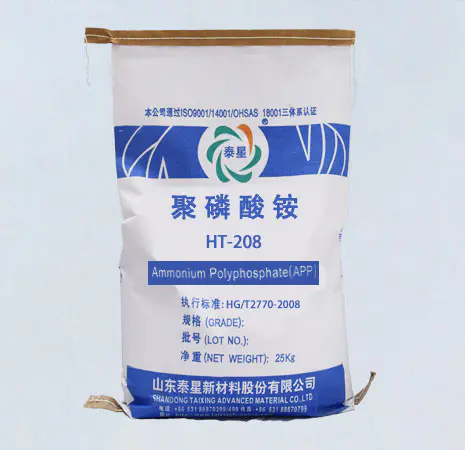
Halogen-Free Flame Retardant APP

Ⅰ. Offshore wind power environment

"quadruple ultimate test" for fire-resistant materials

Offshore wind power platforms are not ordinary industrial environments, and their rigor is reflected in coordinated attacks from multiple dimensions:

1. High salt spray corrosion: Sea breeze is rich in salt particles such as sodium chloride, forming a persistent salt spray environment. Chloride ions (Cl ⁻) have extremely strong penetrability and corrosiveness.

2. Continuous high humidity: The relative humidity remains above 80% for a long time, even up to 100%, providing a constant driving force for water infiltration and material hydrolysis.

3. Dry wet cold cycle: Sunlight, wind and rain, day and night, and seasonal changes cause severe fluctuations in surface temperature and humidity of the structure, resulting in periodic stress.

4. Long term mechanical stress: The vibration caused by the operation of the fan and the structural micro motion caused by wind and waves require the coating to have excellent fatigue resistance and adhesion retention ability.

In this environment, the failure of fireproof coatings is not only an aesthetic issue, but also a major safety hazard for steel structures to lose their protective function in a fire.

Ⅱ. Why are traditional low to medium aggregation apps (N<1000) inevitably "short-lived" at sea?

The aggregation degree (N) of an APP, which is the average number of repeating units in its molecular chain, directly determines its physical and chemical properties.

The chain failure mechanism of low polymerization APP (such as N ≈ 500) in marine environment:

1. Molecular level: Accelerated hydrolysis and collapse of functional core

·The flame retardant function of the APP relies on its long-chain polyphosphate structure catalyzing the formation of carbon at high temperatures. In humid and hot environments, water molecules attack the P-O-P bonds in their molecular chains, leading to chain breakage and hydrolysis.

·The lower the degree of polymerization, the shorter the molecular chain and the higher the proportion of end groups. The end group is more unstable and provides more starting points for hydrolysis reactions. Its hydrolysis rate constant (k) is significantly higher.

·In the formula, the relationship between the decrease in molecular weight (Mw) and time (t) is approximately: ln (Mw) ∝ - k · t. The k value of low N-value APP is larger, resulting in a sharp decline in its effective molecular weight (and catalytic activity) in the short term. The final product of hydrolysis, ammonium phosphate, has no catalytic ability to form charcoal.

2. Coating layer: physical precipitation, structural damage, and corrosion induction

·Moisture absorption and ion migration: Low molecular weight APP has strong hydrophilicity, expands in volume after moisture absorption, and destroys the cohesive strength of the coating. The water-soluble ammonium phosphate salt produced by hydrolysis migrates with water to the surface of the coating and crystallizes (salt precipitation), forming white channels that greatly accelerate the penetration of water and chloride ions.

·Self catalytic corrosion cycle: The leaked acidic phosphate and chloride ions form a highly corrosive electrolyte on the surface of the steel, inducing and accelerating substrate corrosion. The volume expansion of rust products (up to 6-7 times the original volume) breaks the coating from the inside, completely destroying its integrity.

·Early failure of fire resistance: After months or years of service, the APP in the coating may have partially or completely failed due to hydrolysis. When a real fire occurs, the coating cannot form a complete and strong expanded carbon layer, and the fire resistance time is much lower than the design value, causing catastrophic consequences.

Ⅲ. High Aggregation APP with N>1000: Building Molecular Level Long Term Defense Line

High aggregation APP (usually referring to type II crystalline APP with N>1000) systematically addresses maritime challenges through its inherent advantages in molecular structure:

1. Intrinsic high hydrolytic stability

·Lower end group concentration: Long molecular chains significantly reduce the number of unstable end groups per unit mass, thereby lowering the starting point of hydrolysis reactions from the source.

·Higher crystallinity and density: Long chain molecules are more easily arranged in a regular manner, forming particles with higher crystallinity and denser structure. This dense structure is like putting "armor" on molecular chains, physically blocking the contact and penetration of water molecules.

·Thermodynamic stability: Long chain structures have higher thermal decomposition temperatures (usually>300°C), and their chemical bonds have relatively higher thermodynamic stability at room temperature.

2. Excellent weather resistance and performance retention ability

·Extremely low water solubility: APPs with N>1000 typically have a water solubility of<1 g/100ml at room temperature, much lower than products with low to medium polymerization degrees (up to 5-10 g/100ml). This directly translates into the coating's resistance to extraction and loss in long-term immersion or high humidity environments.

·Excellent salt spray resistance: The stable molecular structure is not prone to complex side reactions with chloride ions, which can better maintain the neutral barrier function of the coating and delay corrosion.

·Ensuring long-term fire resistance reliability: After simulating accelerated aging in marine environments (such as salt spray wet heat cycles) for thousands of hours, the fire resistance degradation rate of high polymerization degree APP coatings can be controlled within 10%, while the degradation rate of low polymerization degree systems may exceed 50%, or even completely fail.

Ⅳ. Key indicator validation

1. Core indicator: viscosity of 1% aqueous solution

·This is the most reliable industrial method for indirectly characterizing the degree of polymerization. APP with N>1000 typically has a rotational viscosity of over 30 mPa · s for its 1% aqueous solution at 25°C, while high-quality products can reach over 50 mPa · s. Viscosity is positively correlated with molecular weight.

2. Auxiliary indicators: Thermal analysis (TGA/DSC)

·Thermogravimetric analysis (TGA): High degree of polymerization APP loses less weight due to moisture absorption before the main decomposition stage (<250°C), and the main decomposition temperature is higher and more concentrated.

·Differential Scanning Calorimetry (DSC): Its melting peak is sharper and its crystallinity is higher.

3. Performance verification: Accelerated aging test

·Suppliers must be required to conduct testing of the coating system themselves, rather than simply testing the APP powder. Key tests include:

·Neutral salt spray test (NSS): No blistering or rusting after ≥ 3000 hours.

·Constant humidity test for condensate water: ≥ 4000 hours.

·Fire resistance test after aging: After the above aging, a standard fire test should be conducted, and the fire resistance limit attenuation should meet strict standards (such as ≤ 15%).

Ⅴ. Conclusion

For offshore wind power assets with a design lifespan of over 25 years, the selection of their fire safety systems must be based on the principle of minimizing lifecycle costs and risks, rather than initial procurement costs.

·Choosing an app with N<1000 means choosing a higher implicit risk: during the service life of the wind turbine, multiple expensive fireproof coating maintenance or re coating may be required, and the potential cost of not being able to provide reliable protection in the event of a fire is incalculable.

·Choosing a high aggregation APP with N>1000 means choosing deterministic guarantees based on molecular science. It injects durability genes that resist time and natural erosion into fireproof coatings from the roots of material chemistry, ensuring that the invisible fireproof barrier remains as strong as ever throughout the entire life cycle of assets.

Related News
Leave me a message
X
We use cookies to offer you a better browsing experience, analyze site traffic and personalize content. By using this site, you agree to our use of cookies. Privacy Policy
RejectAccept