Shandong Taixing Advanced Material Co., Ltd.
News

What Is the Flame Retardant Mechanism of Aluminum Hydroxide?

2026-03-23 0 Leave me a message

Aluminum hydroxide (ATH, Al(OH)₃), as the most widely used and environmentally friendly halogen-free inorganic flame retardant in the world, has five core advantages of flame retardancy, smoke suppression, filling, non toxicity, and low cost. It is widely used in fields such as epoxy resin, unsaturated resin, PVC elastomer, EVA cable material, rubber composite material, electronic sealing material, and building decoration material. Against the backdrop of increasingly strict global environmental regulations and the mainstream trend of halogen-free flame retardant, aluminum hydroxide has become the preferred solution for high-end material flame retardant systems due to its non-volatile, non-corrosive, and non-toxic gas characteristics.


I. Core mechanism one: High temperature dehydration absorbs heat, rapidly reducing material temperature

The most core and fundamental flame retardant effect of aluminum hydroxide is the endothermic effect of thermal decomposition.

When the filled polymer material is heated to the range of 200°C - 320°C, aluminum hydroxide undergoes complete dehydration reaction, releasing crystal water and converting into activated alumina. The reaction equation is as follows:

2Al(OH)₃ → Al₂O₃ + 3H₂O↑


This process has two key flame retardant characteristics:

1. Strong heat absorption capacity: Each gram of aluminum hydroxide decomposition can absorb 1050-1200 J of heat, which can quickly absorb the combustion heat on the surface and inside of the material, force the substrate temperature to be lower than the critical temperature of thermal decomposition, thereby terminating or delaying combustion.

2. Accurate temperature threshold: The decomposition temperature is highly matched with the thermal degradation temperature of most thermoplastic materials and thermosetting resins, and the flame retardant mechanism can be activated immediately when the material enters the dangerous temperature range, achieving early protection.


Simple understanding: Aluminum hydroxide is like a "cooling system" inside the material, absorbing a large amount of heat at the moment of ignition, making it impossible for the material to maintain the combustion temperature and suppressing the continuation of combustion from the root.


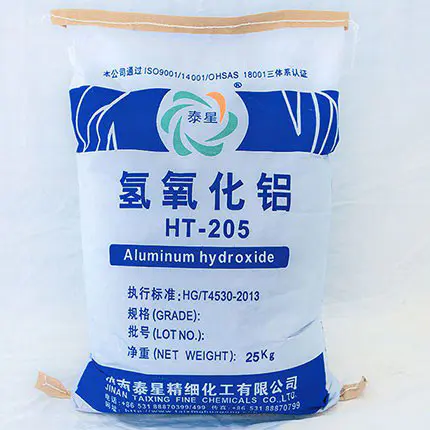
Aluminum Hydroxide


Ⅱ. Core mechanism two: Release water vapor to dilute combustible gases and oxygen

During the dehydration and decomposition process, aluminum hydroxide releases a large amount of high-temperature water vapor, which is its second key flame retardant function.

Water vapor forms a high-density gaseous barrier on the surface of the material, achieving a triple flame retardant effect:


1. Dilution of combustible gases: Combustible gases such as carbon monoxide, alkanes, and alkenes produced by the thermal decomposition of materials are greatly diluted by water vapor, reducing their concentration to below the combustion limit.

2. Isolation of oxygen: Water vapor occupies the combustion interface space, reducing the diffusion of external oxygen into the material and creating a weakly oxidizing environment.

3. Reduce gas phase temperature: Water vapor gasification further absorbs heat, reduces flame temperature, and weakens the sustained thermal radiation of the flame on the substrate.


Unlike halogenated flame retardants, the water vapor released by aluminum hydroxide is non-toxic, non corrosive, and non carcinogenic, fully complying with global environmental standards such as EU REACH, RoHS, and US UL, making it a core representative of green flame retardant systems.


Ⅲ. Core mechanism three: Generate a dense alumina layer to physically isolate heat and flames

After dehydration of aluminum hydroxide, a layer of white, dense, high melting point, and non flammable activated alumina (Al₂O₃) will be generated in situ on the surface of the material.

Aluminum oxide has a melting point of up to 2050 ℃ and possesses strong thermal stability and structural strength, serving as a triple physical barrier:

1. Isolate heat transfer: block external flames from radiating heat to the internal substrate, and prevent further thermal decomposition of the material.

2. Block droplet dripping: Fix the polymer melt to prevent secondary combustion or fire spread caused by droplet dripping.

3. Lock in combustible gases: suppress the escape of internal combustible gases and cut off the supply of burning substances.


This layer of alumina shell will not burn, smoke, or break, and is an important physical basis for achieving long-lasting flame retardancy of aluminum hydroxide.


Ⅳ. Core mechanism four: Strong smoke suppression, capturing toxic smoke and tar particles

In actual fire accidents, thick smoke and toxic gases are the primary factors causing harm. The core advantage of aluminum hydroxide compared to other flame retardants is synchronous flame retardancy and strong smoke suppression.

Its smoke suppression mechanism is reflected in three aspects:

1. Low temperature suppression of smoke and dust generation: absorbing heat and cooling in advance to reduce the black smoke, tar, and toxic particles generated by high-temperature cracking of materials.

2. Physical adsorption of smoke particles by alumina layer: The porous surface structure can capture smoke particles and reduce smoke concentration.

3. No secondary pollution: does not produce highly toxic smoke such as hydrogen halides and dioxins, and meets the strict smoke density requirements in fields such as construction, transportation, indoor materials, and rail transit.


In applications such as epoxy resin, SMC/BMC composite materials, wires and cables, adding aluminum hydroxide can reduce the smoke density (DS) of the material by more than 60%, significantly improving fire safety.


Ⅴ. Core mechanism five: Collaborative carbonization enhances the self extinguishing properties of materials

Aluminum hydroxide does not act alone and can form a synergistic carbonization effect with the resin matrix in high filling systems

1. The alumina layer promotes the rapid formation of a stable carbon layer on the surface of the substrate;

2. Heat absorption and dehydration accelerate the densification of the carbon layer, enhancing its antioxidant capacity;

3. Reduce combustion time, make the material self extinguishing, and immediately stop burning after leaving the flame.


This synergistic effect enables aluminum hydroxide to exhibit flame retardant efficiency far exceeding that of ordinary inorganic fillers in highly filled epoxy resins, unsaturated polyesters, and elastomers.


Ⅵ. Summary of flame retardant mechanism of aluminum hydroxide

Taking into account the above effects, aluminum hydroxide does not achieve flame retardancy through a single mechanism, but rather through the simultaneous occurrence of four functions: heat absorption and cooling, gas-phase dilution, solid-phase isolation, smoke suppression, and solid carbon fixation, forming a complete three-dimensional flame retardant network:

1. Heat absorption: forced cooling to prevent continuous pyrolysis of materials;

2. Water release: Dilute oxygen and combustible gases;

3. Shell formation: forming an alumina insulation layer;

4. Smoke suppression: Reduce toxic smoke and enhance safety.


This is also the fundamental reason why aluminum hydroxide can become the mainstream material in the global halogen-free flame retardant field.

Related News
Leave me a message
X
We use cookies to offer you a better browsing experience, analyze site traffic and personalize content. By using this site, you agree to our use of cookies. Privacy Policy
RejectAccept