The European Union's "Restriction of Hazardous Substances in Electrical and Electronic Equipment Directive" (RoHS 2.0, 2011/65/EU and its amendments) sets clear restrictions and compliance requirements for hazardous substances in wire and cable materials. This article systematically analyzes the technical boundaries and exemption clauses for the ten restricted substances (lead, cadmium, hexavalent chromium, mercury, polybrominated biphenyls, polybrominated diphenyl ethers, and four phthalates) under RoHS 2.0 for cable materials. From the perspective of polymer formulation science, it thoroughly elaborates on the full-process development solutions for compliant materials, including molecular design, system selection, key process control, and supply chain verification, aimed at meeting the triple performance goals of flame retardancy (IEC 60332), halogen-free (IEC 60754), and low-smoke toxicity (IEC 61034). This provides a systematic technical pathway for green cable products targeting the European market.
|
Restricted substances |
Maximum allowable concentration (homogeneous material) |
Potential sources and risk links in cable materials |
|
Lead(Pb) |
0.1% (1000 ppm) |
Stabilizers (traditional PVC heat stabilizers), pigments (lead chromate), solder coatings, alloy components, and some old recycled materials. |
|
Cadmium(Cd) |
0.01% (100 ppm) |
Pigments/colorants (such as cadmium yellow and cadmium red), PVC stabilizers (cadmium barium/zinc system), and impurities in electroplated coatings. |
|
Mercury(Hg) |
0.1% (1000 ppm) |
Very rare, possibly due to pollution or specific catalyst residues. |
|
Hexavalent chromium(Cr VI) |
0.1% (1000 ppm) |
Metal shielding layer treated with chromate passivation (such as armored steel strip), some yellow pigments. |
|
Polybrominated biphenyls(PBB) |
0.1% (1000 ppm) |
Flame retardants (historically used for polymers, now largely banned). |
|
Polybrominated diphenyl ether(PBDE) |
0.1% (1000 ppm) |
Flame retardants (decabromodiphenyl ether, etc. have been widely used in PE, PP, ABS, but RoHS explicitly restricts them). |
|
Four types of phthalates(DEHP, BBP, DBP, DIBP) |
0.1% (1000 ppm) |
PVC plasticizer (the main risk of flexible PVC cable sheath/insulation). |
Certain exemptions in Annex III/IV of RoHS 2.0 are crucial for the cable industry, but it is important to note the validity period and scope of these exemptions
· Lead:
· Waiver 7(c)-I: Lead used as an impurity in rare-earth garnet Faraday rotators for optical fiber communication systems (valid until July 21, 2025? Subject to latest revisions).
· Other lead exemptions: Lead in high-temperature molten solder and lead in electronic component glass/ceramics, which have low correlation with the base material of cables.
· Cadmium: Exemption of cadmium and its compounds in electrical contact materials (applicable to certain connector terminals, not the cable body).
Core Development Principle: Unless explicitly and necessarily exempted, the formulation design must prohibit the use of any restricted substances, whether they exist in resins, additives, masterbatch, or processing aids.
Compliance with RoHS 2.0 is the baseline requirement, while "halogen-free" is typically a high-performance standard for cables in the European market (particularly in construction and rail transit). Both must be achieved simultaneously.
· Prohibition System: Brominated flame retardant systems based on PBB and PBDE are directly prohibited by RoHS and cannot be used.
· System permitted but subject to evaluation:
· Non-PBDE brominated flame retardants: such as brominated polystyrene, brominated epoxy resin, ethylene bis(tetrabromophthalimide), etc. Although not prohibited by RoHS, they may be restricted by other regulations (e.g., REACH SVHC) or end-brand environmental standards. Additionally, they may produce corrosive gases during combustion, which does not align with the industry trend of "halogen-free.".
· Chlorinated flame retardants: such as chlorinated paraffin. Not prohibited by RoHS, but also faces environmental concerns and exclusion due to "halogen-free" requirements.
· Mainstream halogen-free and RoHS-compliant system:
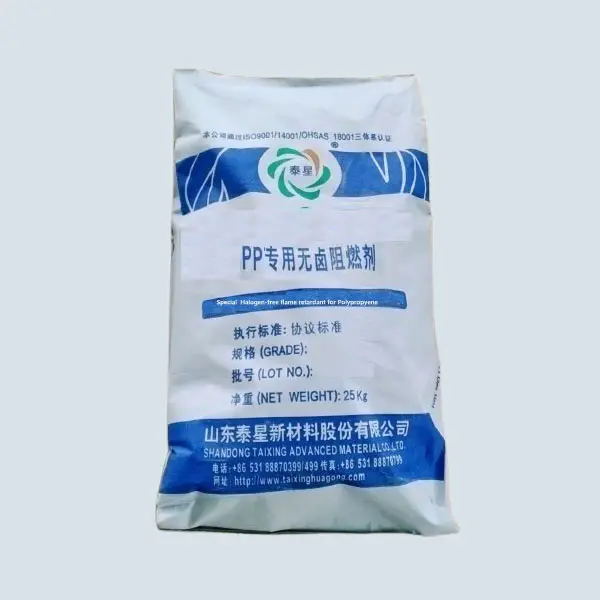
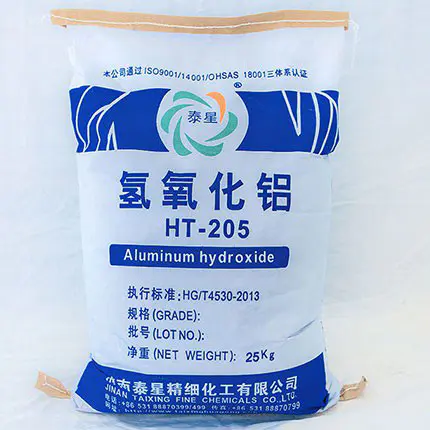
· Metal hydroxides: Aluminum hydroxide (ATH), magnesium hydroxide (MDH). Pure in nature, free from RoHS-restricted substances, they are an absolutely safe and green alternative.
· Phosphorus-nitrogen expansion system: ammonium polyphosphate (APP), melamine derivatives (MCA, MPP, etc.). Attention must be paid to heavy metal impurities (such as cadmium, lead) in the raw materials.
· Phosphorus-based: organic phosphates, hypophosphites, etc. Their thermal stability and hydrolytic stability need to be evaluated.
· Silicon-based, nitrogen-based, and others.
· Base resin: Polyolefins (PE, PP, EVA, POE), elastomers (TPU, TPE), and cross-linking systems (XLPE, XLPO) are inherently free of RoHS-restricted substances and are safe choices. PVC remains usable but must be paired with lead-free/cadmium-free stabilizers (calcium-zinc stabilizers) and non-phthalate environmentally friendly plasticizers (such as trimellitates, citrates, and polymer-based plasticizers).
· Coloring agent: Must use organic pigments or specific inorganic pigments (such as iron oxide-based pigments that have undergone compliance treatment) free of lead, cadmium, and chromates.
Other additives: Antioxidants, lubricants, cross-linking agents (e.g., DCP), sensitizers, etc., all require suppliers to provide RoHS Conformity Declaration (DoC) and supporting test reports (e.g., ICP-MS data).
Objective: Ensure excellent mechanical properties (tensile strength, elongation at break, abrasion resistance) and electrical properties (dielectric strength, insulation resistance) while meeting flame retardancy requirements of IEC 60332-1 (single vertical burn) or higher grades (e.g., IEC 60332-3 bundled burn), as well as IEC 60754-1/2 (halogen-free low corrosive gases) and IEC 61034-1/2 (low smoke density).
|
Cable type |
Recommended Basic Material System |
Core halogen-free flame retardant system |
Key processes and performance points |
|
Building wiring insulation/sheath |
EVA/PE alloy, or EVA/LLDPE/POE blend |
High filling ATH system (60-65%) can be compounded with a small amount of surface modified MDH to enhance temperature resistance. Excellent smoke suppression. |
Ensure extrusion processability and surface smoothness under high filling conditions; Control the melt strength to prevent dripping; Long term thermal aging (such as 90 ℃, 7d) testing is required. |
|
Communication data cable sheath |
PE/EVA or TPU based |
ATH/MDH complex system (total filling 50-60%). TPU system can choose phosphorus nitrogen liquid flame retardant. |
Balancing flexibility and flame retardancy; Pay attention to wear resistance and environmental stress cracking resistance (ESC); High color stability is required. |
|
Power cable (XLPE insulation) |
LDPE based cross-linked material |
High thermal stability MDH is predominant (55-65%). ATH is not suitable for peroxide crosslinking process due to its low decomposition temperature. |
MDH requires special silane treatment to be compatible with silane crosslinking systems; Ensure that it does not affect the cross-linking degree (thermal extension); Strictly control impurity ions to ensure electrical performance. |
|
Automotive cables (low voltage) |
Cross linked polyolefin or TPE |
High heat-resistant MDH or phosphorus nitrogen hydroxide composite system. The filling amount needs to balance flexibility and flame retardancy (usually 40-55%). |
Meet specific standards in the automotive industry (such as ISO 6722); Excellent oil resistance, coolant resistance, and heat cycling resistance are required; Low precipitation. |
|
High flexibility cable |
POE/SEBS based elastomer |
Ultra fine modified ATH or microencapsulated phosphorus nitrogen flame retardant, with a low filling amount (<50%), can be synergistically combined with nano fillers (modified montmorillonite). |
The core is to maintain high elongation (>300%) and repeated bending life; The surface treatment and dispersion of flame retardants are crucial. |
1. Surface treatment and dispersion: Surface treatment with stearic acid, silane, or titanate coupling agents is necessary for ATH/MDH to improve compatibility with polymer interfaces, enhance mechanical properties and flame retardant efficiency, while reducing moisture absorption.
2. Compound collaborative technology:
·ATH+MDH: Achieving heat absorption synergy across a wide temperature range.
·Hydroxide+silicon system (such as silicone masterbatch): enhances melt strength, promotes carbonization, and improves dripping.
·Hydroxide+phosphorus nitrogen system (such as APP/MCA): Constructing an expansion barrier layer can moderately reduce the total filling amount.
3. Processing temperature control: Especially for ATH filling systems, the temperature setting of each section of the extruder must be lower than its initial decomposition temperature (about 200 ℃) to prevent the generation of bubbles and water vapor during the processing, which can cause material degradation and surface defects.
Compliance development is not only a technical issue, but also a management system issue.
1. Supplier Qualification Review: All raw material suppliers are required to provide valid RoHS Declaration of Conformity (DoC) and Full Material Disclosure (FMD) for each batch.
2. Incoming Inspection (IQC):
·Regular spot checks should be conducted on high-risk materials (color masterbatch, flame retardants, stabilizers, plasticizers), and the detection methods should refer to the IEC 62321 series standards (such as ICP-OES/MS for heavy metals and GC-MS for organic restricted substances).
·Establish a Qualified Supplier List (AVL) for raw materials and update it dynamically.
3. Batch traceability: Establish a complete traceability system from raw material storage, production batch to finished product outbound, ensuring that any product can be traced back to its original material batch and related testing reports.
Developing halogen-free wire and cable materials that meet the EU RoHS 2.0 standard is a systematic project that integrates regulatory interpretation, material science, process engineering, and quality management.