Shandong Taixing Advanced Material Co., Ltd.
News

How Can Wet Grinding Improve the Wettability and Dispersibility of Aluminum Hydroxide in Resin?

2026-03-13 0 Leave me a message

In the field of polymer composite materials, the application of aluminum hydroxide (ATH) as an efficient halogen-free flame retardant filler is crucial. However, the poor compatibility and tendency to aggregate between ATH and resin matrix have long constrained their full performance. Traditional dry mixing often leads to uneven dispersion and the formation of stress weak points. The introduction of wet grinding technology provides a scientific and efficient solution to this problem.


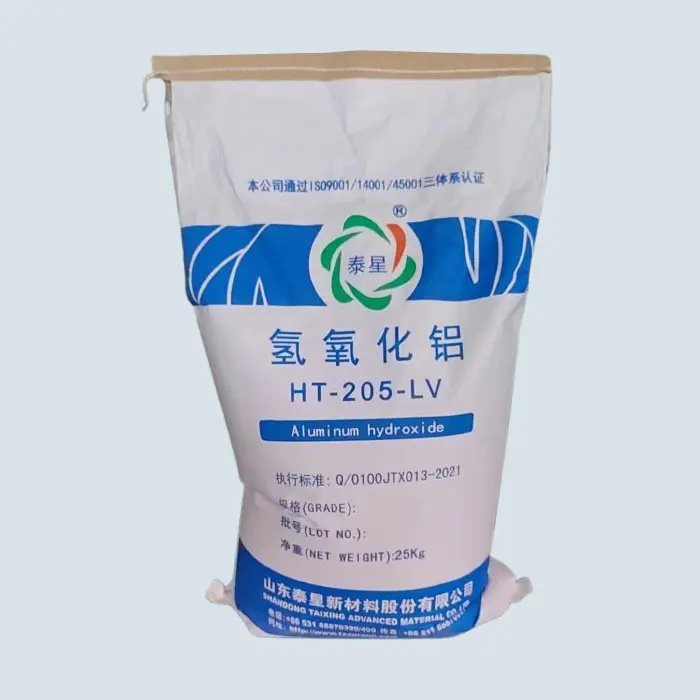
Aluminum Hydroxide


Ⅰ.The core mechanism of wet grinding: Three in one collaborative optimization

Wet grinding is not a simple process of reducing particle size, but a collaborative engineering that achieves particle refinement, surface modification, and interface activation simultaneously in a liquid medium.

1. Precise control of particle size and optimization of morphology (based on physical dispersion)

Wet grinding applies high-frequency impact, shear, and friction forces to the slurry through grinding beads (such as zirconia) in a liquid-phase environment where grinding aids (such as dispersants) are present. This force can effectively depolymerize the hard aggregates of ATH and cause the original crystal particles to break.

·Particle size reduction: Stabilize and control the D50 particle size to the sub micron or even nanometer level. According to the classic de Gennes infiltration theory, smaller particle sizes reduce the capillary pressure (Δ P ∝ γ/r, where γ is the surface tension and r is the pore radius) required to overcome micro pores and defects on the surface of resin melt filled particles, thereby promoting micro infiltration.

2. Surface chemical modification (key to reducing interfacial energy)

The liquid-phase environment of wet grinding provides an ideal reaction site for "online" surface modification. During or after the grinding process, surface modifiers (such as silane coupling agents, titanate coupling agents, fatty acids, etc.) can be added simultaneously.

·In situ grafting reaction: Taking silane coupling agents (such as KH-550, KH-560) as an example, their alkoxy groups are hydrolyzed into silanol under the catalysis of water, and then undergo condensation reaction with hydroxyl groups on the ATH surface to form strong Si-O-Al covalent bonds. Its organic long chains (such as amino and epoxy groups) extend towards the resin matrix and can participate in the curing reaction of the resin or form physical entanglement.

·Fundamental improvement in interfacial energy: The modified ATH surface changes from hydrophilic to oleophilic (hydrophobic), and its surface free energy (γ _ s) is closer to the surface free energy (γ _ l) of the resin. According to Young's wetting equation (γ - sv=γ - sl+γ - lv cos θ), a decrease in contact angle θ and an increase in cos θ indicate a fundamental improvement in the resin's wetting ability (spreading) towards particles. The significant decrease in interfacial tension (γ _stl) is the direct thermodynamic driving force for the improvement of wettability.

3. Decentralized stabilization mechanism (guarantee to prevent secondary agglomeration)

Dispersants (such as polyelectrolytes and polymer surfactants) in wet grinding slurries maintain long-term dispersion stability of ATH particles in the liquid phase through a dual mechanism of electrostatic repulsion and steric hindrance. This stable state lays the foundation for pre dispersion in subsequent mixing with resins.

·Electrostatic stability (DLVO theory): Ionic dispersants adsorb onto the surface of particles, forming a double layer. When particles approach, they disperse due to electrostatic repulsion.

·Stability of steric hindrance: The long chains of polymer dispersants form an adsorption layer on the surface of particles. When the particles approach, the overlapping adsorption layers cause a decrease in the conformational entropy of the polymer chains and an increase in osmotic pressure, resulting in a strong repulsive force.

This pre dispersed stable structure can be maximally retained during the mixing, drying, or curing process of ATH slurry and resin, achieving "perfect transfer" into the resin matrix.


Ⅱ.Improvement of final composite material performance

ATH processed through wet grinding technology achieves deep integration from macro to micro, and from physics to chemistry in the resin, ultimately reflected in the comprehensive improvement of composite material properties:

·Excellent dispersion uniformity: Under scanning electron microscopy (SEM), ATH particles can be observed uniformly distributed in the resin continuous phase at the nanometer/submicron scale, without visible aggregates.

·Stronger interface bonding: The modified interface forms an effective "flexible layer" or chemical bond, allowing stress to be effectively transmitted and significantly improving the mechanical strength (tensile, impact strength) and durability of the material.

·Stable flame retardant efficiency and physical properties: Uniform dispersion ensures the synergistic, efficient, and stable barrier effect of flame retardant components in a fire, while avoiding local performance degradation caused by filler agglomeration.

·Improved processing rheology: Good particle wetting, less agglomeration, can significantly reduce the viscosity of composite material melt, increase filling amount and processing flowability.


Conclusion

Wet grinding technology systematically overcomes the problem of infiltration and dispersion of aluminum hydroxide in resin matrix through the triple synergistic effect of physical crushing, chemical modification, and dispersion stabilization. It reduces the interfacial energy thermodynamically and provides a dispersed driving force and stability mechanism kinetically, thereby achieving an intimate bonding between the filler and the matrix at the nanoscale. This is not only a technological innovation, but also an in-depth application of colloid and interface science theory, providing a key technological path for the development of the next generation of high-performance, high filling, and functionalized polymer composite materials.

Related News
Leave me a message
X
We use cookies to offer you a better browsing experience, analyze site traffic and personalize content. By using this site, you agree to our use of cookies. Privacy Policy
RejectAccept