Shandong Taixing Advanced Material Co., Ltd.
News

ZB-2335 vs ZB-1H Difference

2026-05-09 0 Leave me a message

In the family of zinc borate flame retardant synergists, the difference in hydration state is not simply a physical parameter, but points to completely different material design philosophies and application boundaries. ZB-2335 (2ZnO·3B₂O₃·3.5H₂O) and ZB-1H series (generally referring to low hydration, typical such as 2ZnO·3B₂O₃·H₂O) represent two core technological paths: the "active cooling" strategy based on crystal water phase transition heat absorption and the "passive protection" strategy based on high-temperature glass barrier. This article will systematically deconstruct the essential differences between the two, providing a theoretical framework for the precise design of high-temperature flame retardant formulas.


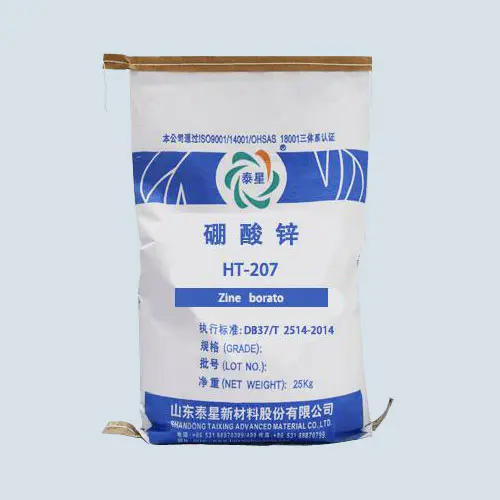
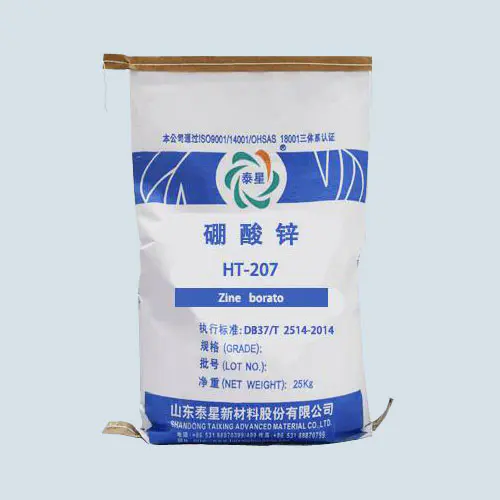
Zinc Borate


Ⅰ. The fundamental boundary between crystal chemistry and thermal stability

The difference in chemical composition directly defines the thermal boundary and upper limit of application of materials.

core features

ZB-2335

ZB-1H (typical monohydrate)

Typical chemical formula

2ZnO·3B₂O₃·3.5H₂O

2ZnO·3B₂O₃·H₂O (or approximately low hydration ratio)

Crystalline water content

~14.5 wt.%

~3.5 wt.%

Theoretical dehydration enthalpy

Higher (about 700-900 J/g, derived from crystal water removal)

Extremely low (mainly from the removal of trace adsorbed water and structural water)

Core hot behavior

Significant endothermic phase transition

Excellent thermal stability


1. ZB-2335: Strategic value of hydration phase transition

Its 3.5 crystal waters are key "energy storage devices" and "reaction regulators". Within the temperature range of 290-450°C, these crystalline waters are removed in stages in a controlled manner, and this process:

·Absorb a large amount of heat, effectively cool the substrate, and delay temperature rise.

·Release water vapor to dilute the concentration of combustible gases and oxygen.

·The porous anhydrous zinc borate skeleton formed after dehydration has high reactivity and provides a precursor for subsequent vitrification or ceramicization reactions.

2. ZB-1H: High temperature stable structural cornerstone

The extremely low degree of hydration makes its structure denser and more stable. Its main advantages are:

·The starting temperature of dehydration is significantly delayed, usually>350°C, or even higher.

·Within the conventional processing temperature range of engineering plastics (~300°C), the structure remains intact without any risk of foaming or performance degradation.

·The thermogravimetric analysis (TGA) curve shows minimal mass loss before 700°C, demonstrating its potential as a high-temperature stable filler or reactant.


Ⅱ. The dialectical unity of thermal decomposition kinetics and action window

The "action time window" of the two during the combustion process is completely different, which determines their matching logic with different matrix resins.

Thermal response curve of ZB-2335:

Its operating window covers a wide temperature range from the initial stage of polymer decomposition to intense combustion (~300-500°C). This "full process, progressive" reaction characteristic allows it to perfectly fill the "gap period" of heat absorption when combined with ATH (dehydration peak~200-300°C) and MDH (dehydration peak~300-400°C), achieving seamless connection of the endothermic curve.

Thermal response curve of ZB-1H:

It is like a 'high-temperature sniper', playing a core role only in the higher temperature stage (usually>400°C) after the polymer undergoes initial decomposition and forms flammable volatiles. At this point, it mainly constructs the protective layer not through heat absorption, but through high-temperature solid-state reactions with decomposition products such as carbon, phosphorus oxides, and metal oxides.


Ⅲ. Path differences in flame retardant synergistic mechanisms

1. Condensed phase carbonization and barrier formation

·The path of ZB-2335: "Dehydration → Formation of active boric acid/zinc oxide → Catalytic polymer dehydration crosslinking into carbon → Melting with metal hydroxide residue to form boron aluminum/boromagnesium oxide glass layer". The water vapor released by its crystalline water helps to form an expanded and porous carbon layer structure.

·The path of ZB-1H: Due to the lack of a large amount of crystalline water, its path is more direct. At high temperatures, zinc borate itself melts (or partially melts) and co melts with the carbon layer formed on the combustion surface and other inorganic substances (such as pyrophosphate formed by phosphorus based flame retardants) to form a continuous, dense, and high-strength glassy or ceramic protective layer. This barrier has higher thermal stability and better resistance to airflow erosion.

2. Gas phase interaction

The water vapor generated by ZB-2335 dehydration has a diluting effect on the gas phase. However, ZB-1H makes little contribution in this regard, but the boron containing free radicals it may release at higher temperatures have the potential to contribute to quenching flame free radical chain reactions.


Ⅳ. Accurate adaptation to engineering application scenarios

Based on the fundamental differences mentioned above, the applicable fields of the two have formed a clear distinction.

Core application areas of ZB-2335:

1. Halogen free formulations for general and medium high temperature engineering plastics, such as PA6, PA66, PBT, PET, and their glass fiber reinforced materials. Its window of action coincides highly with the decomposition temperature of these resins (~350-450°C).

2. A system with ATH/MDH as the main flame retardant: as an "endothermic relay" and "char forming synergist", it improves the flame retardant efficiency of the system, reduces the total filling amount, and enhances the electrical performance (CTI).

3. Materials with strict upper limits on processing temperature: their thermal stability is sufficient to handle processing below~300°C while providing effective protection.

Core application areas of ZB-1H (monohydrate):

1. Ultra high temperature engineering plastics: such as PPS, PEEK, LCP, and high-temperature nylon (PPA). The processing temperature of these materials often exceeds 320°C, even reaching 380-400°C. ZB-2335 has undergone significant dehydration and deactivation at this temperature, while the ZB-1H structure remains stable and is the only feasible choice for zinc borate.

Key Performance Comparison Table:

Performance dimension

ZB-2335

ZB-1H (Monohydrate)

to comment

Optimal operating temperature window

300-500°C

400-700°C+

Defined application baseline

Contribution to LOI improvement

More significant (in the medium low temperature zone)

More effective in ultra-high temperature zones

Depends on the decomposition temperature of the matrix

Enhancing the role of CTI

Excellent (promoting dense insulation layer)

Excellent to Ultra Excellent (High Temperature Ceramic Layer)

ZB-1H may be better in high-temperature systems

Foam risk during processing

Existence (requires control of processing temperature)

extremely low

ZB-1H has higher processing tolerance

hygroscopicity

High (requires moisture-proof storage)

low

ZB-1H has better storage stability

Synergistic effect with phosphorus based flame retardants

Excellent (forming borophosphate glass)

Superior (forming more stable eutectic at high temperatures)


economy

The cost is usually low

The cost is usually high

Price reflects the complexity and purity of the process


Ⅴ.  Conclusion and Selection Decision

The ZB-2335 and ZB-1H are not simply upgraded or replaced, but rather two specialized weapons designed for different battlefields. The core criteria for selection are the processing temperature and thermal decomposition temperature of the matrix resin.

Selection decision logic:

Step 1: Determine the processing and decomposition temperature of the resin system

·Processing/decomposition temperature<300°C: ZB-2335 can be considered, focusing on its cost and comprehensive synergistic advantages.

·The processing/decomposition temperature is between 300-350°C, which is the critical decision-making zone. If pursuing maximum flame retardant efficiency and precise temperature control, ZB-2335 can be selected; If pursuing absolute processing safety and stability, ZB-1H should be selected.

·Processing/decomposition temperature>350°C: ZB-1H or higher heat stable models must be selected. ZB-2335 is no longer applicable.

Step 2: Clarify core performance requirements

·Pursuing extreme CTI values, maintaining performance after long-term thermal aging, and ultra-thin wall V-0, ZB-1H is usually a more reliable choice when temperature allows.

·In cost sensitive, medium to low temperature applications, the cost-effectiveness of ZB-2335 is unparalleled.

Related News
Leave me a message
X
We use cookies to offer you a better browsing experience, analyze site traffic and personalize content. By using this site, you agree to our use of cookies. Privacy Policy
RejectAccept