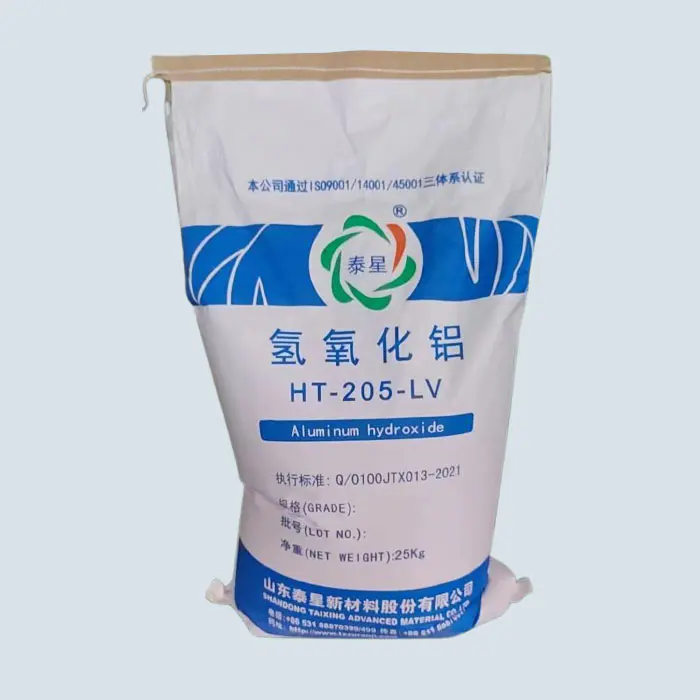
The high filling epoxy resin system, with its excellent mechanical strength, thermal insulation, flame retardancy, and dimensional stability, has become a core material in global high-end manufacturing fields such as electronic encapsulation, power device packaging, composite material molding, high-end adhesives, and electrical casting. Under the requirements of high solid content, high thermal conductivity, and high flame retardant formulations, the addition of inorganic fillers (such as alumina, aluminum hydroxide, magnesium oxide, silicon micro powder, boron nitride, etc.) often exceeds 60wt%. This leads to problems such as high system viscosity, poor flowability, insufficient wettability, difficulty in removing bubbles, increased formation defects, and poor adaptability of automated application processes, which become key bottlenecks restricting product quality and production efficiency.
The abnormal increase in viscosity of high filling epoxy system is not caused by a single factor, but by the superposition of multiple mechanisms:
1. Poor compatibility at the filler resin interface: Inorganic fillers have strong surface polarity and dense hydroxyl groups, forming strong interactions with non-polar epoxy matrices, causing particles to agglomerate and significantly increasing the frictional resistance within the system;
2. Unreasonable specific surface area and particle size distribution of fillers: Nano fillers and ultrafine fillers have a large specific surface area, which adsorbs a large number of resin molecules and forms a "coating layer", resulting in a decrease in effective mobile phase; Single particle size fillers have large gaps and require more resin filling to further increase viscosity;
3. The intrinsic viscosity of the resin matrix is relatively high: high equivalent epoxy resins such as bisphenol A and phenolic resins have long molecular chains and strong intermolecular forces. When not filled, the viscosity reaches thousands of mPa · s, and after high filling, the viscosity increases exponentially;
4. Insufficient dispersion process: low mixing, grinding, and dispersion efficiency, incomplete decomposition and aggregation of fillers, formation of secondary aggregates, abnormal increase in pseudoplasticity and uneven flow of the system;
5. Lack or improper selection of additives: Without effective wetting and dispersing agents or coupling agents, the interfacial tension cannot be reduced, the system's thixotropic structure is excessively constructed, and the static viscosity and construction viscosity are both high.
After identifying the cause, through molecular level design, interface modification, and precise process control, it is possible to achieve a controllable viscosity reduction of 30% -80% without reducing the amount of filler added or sacrificing the performance after curing.
The resin matrix is the basis of system viscosity, and optimizing the matrix formula is the source solution for reducing viscosity, adapting to the environmental protection, low volatility, and high reliability requirements of high-end materials worldwide.
Priority should be given to low molecular weight bisphenol A-type epoxy (E51/E44 low viscosity grade), aliphatic epoxy, cycloaliphatic epoxy, and diluted modified epoxy. The viscosity should be controlled at 500-3000mPa · s at 25 ℃, which increases the basic efficiency of viscosity reduction by more than 40% compared to conventional high viscosity epoxy. Alicyclic epoxy combines low viscosity with resistance to yellowing and weather resistance, making it suitable for high-end overseas applications such as outdoor electronics, photovoltaics, and automotive electronics.
Abandon volatile non reactive diluents and use single functional/bifunctional/multifunctional reactive diluents (butyl glycidyl ether BGE, allyl glycidyl ether AGE, ethylene glycol diglycidyl ether EGDE, neopentyl glycol diglycidyl ether) with an addition amount of 5% -15% to participate in curing crosslinking without residue or migration, avoiding a decrease in heat resistance and adhesive strength. The dual functional diluent has the best viscosity reduction efficiency and can maintain the crosslinking density of the cured material, which is suitable for the strength requirements of high filling systems.
Select modified fatty amines, polyetheramines, low viscosity anhydrides, and latent low viscosity curing agents to reduce the viscosity of curing agent components, while improving compatibility with the epoxy matrix and avoiding a sudden increase in viscosity after mixing. Polyether amine curing agents come with flexible chain segments, which can reduce friction within the system, balance viscosity reduction and toughness improvement, and meet the stringent requirements of global new energy and rail transit fields.
Fillers are the core of high filling systems, and surface modification and particle size grading are key technological paths for reducing viscosity without reducing the amount of fillers added, as well as the core competitiveness of high-end epoxy formulations.
Pre treat the filler with silane coupling agent (KH550/KH560/KH570), titanate coupling agent, aluminate coupling agent, and hyperbranched polymer modifier to form an organic coating layer on the surface of the filler
-Reduce surface polarity, decrease hydrogen bonding and van der Waals forces between particles, and prevent agglomeration;
-Improve compatibility with epoxy matrix, reduce interface voids, and lower flow resistance;
-After modification, the viscosity of the high filling system (≥ 70wt%) can be reduced by 40% -60%, while improving the thermal conductivity, insulation, and mechanical strength of the cured material.
Following the theory of tight packing, a four level grading system consisting of large particle size, medium particle size, small particle size, and nanometer size (such as 50 μ m+10 μ m+2 μ m+50nm) is adopted. Small particle size fillers fill the large particle size gaps, significantly reducing the system porosity and resin encapsulation. The viscosity can be reduced by more than 30% under the same solid content. Grading design should avoid excessive addition of nano fillers to prevent viscosity rebound due to excessive specific surface area.
Priority should be given to using spherical silicon micro powder, spherical alumina, and spherical boron nitride. The rolling resistance of spherical fillers is much lower than that of irregular sheet-like and needle shaped fillers, and the flowability is significantly improved. It is the preferred filler form for high-end electronic potting and epoxy plastic sealing materials.
Additive is a viscosity regulator for high filling epoxy systems, with precise selection to achieve "low addition, high viscosity reduction", in line with global environmental regulations and high-end material performance requirements.
Using epoxy functionalized dispersants, polyacrylic ester dispersants, phosphate ester dispersants, and hyperbranched dispersants, with an addition amount of 0.5% -3%, quickly wet the surface of the filler, break down agglomerates, form a spatially stable layer, reduce inter particle friction, and reduce viscosity by 30% -50%. It is recommended to use strong viscosity reducing dispersants for high solid content systems, which are suitable for nano fillers and high specific surface area filler systems.
Add gas-phase silica, polyamide wax, hydrogenated castor oil, and organic bentonite to construct a controllable thixotropic structure:
-At rest: high viscosity to prevent sedimentation of the filling material;
-During shearing (stirring, dispensing, sealing, pouring): viscosity rapidly decreases and fluidity is excellent;
Realize "low construction viscosity+high static stability" and adapt to global mainstream processes such as automated dispensing, vacuum sealing, and RTM molding.
High viscosity systems are prone to bubble entrapment and difficult to discharge. Adding organic silicon defoamers and non silicon leveling agents can reduce bubble residue, improve system uniformity, and avoid viscosity virtual high and molding defects caused by bubbles.
Provide differentiated solutions for global market demands in different fields, balancing performance, process, and environmental compliance:
1. Electronic encapsulation/power device packaging: spherical filler grading+silane modification+low viscosity epoxy resin, achieving high thermal conductivity, low viscosity, and high insulation, suitable for automotive electronics, 5G communication, and photovoltaic inverters;
2. Composite material RTM/vacuum infusion: low viscosity active dilution compounding+efficient dispersion+shear thinning rheology, improving the resin's wettability on fibers, suitable for aerospace and wind turbine blades;
3. High end adhesive/sealant: Polyether amine curing agent+hyperbranched dispersant, achieving low viscosity, high adhesion, solvent-free, suitable for new energy batteries and rail transit;
4. Electrical casting/insulation components: high flame retardant filler gradation+coupling modification+low viscosity epoxy, suitable for high-voltage electrical and transmission equipment, meeting global IEC and UL standards.
The viscosity issue of high filled epoxy resin is a systemic problem in formulation, fillers, additives, and processes, rather than a single link weakness. Through the compounding of low viscosity matrix, surface modification and grading of fillers, precise selection of specialized additives, and efficient dispersion process, the industry pain point of high viscosity can be completely solved while maintaining high filling advantages, improving product yield, production efficiency, and global market competitiveness.