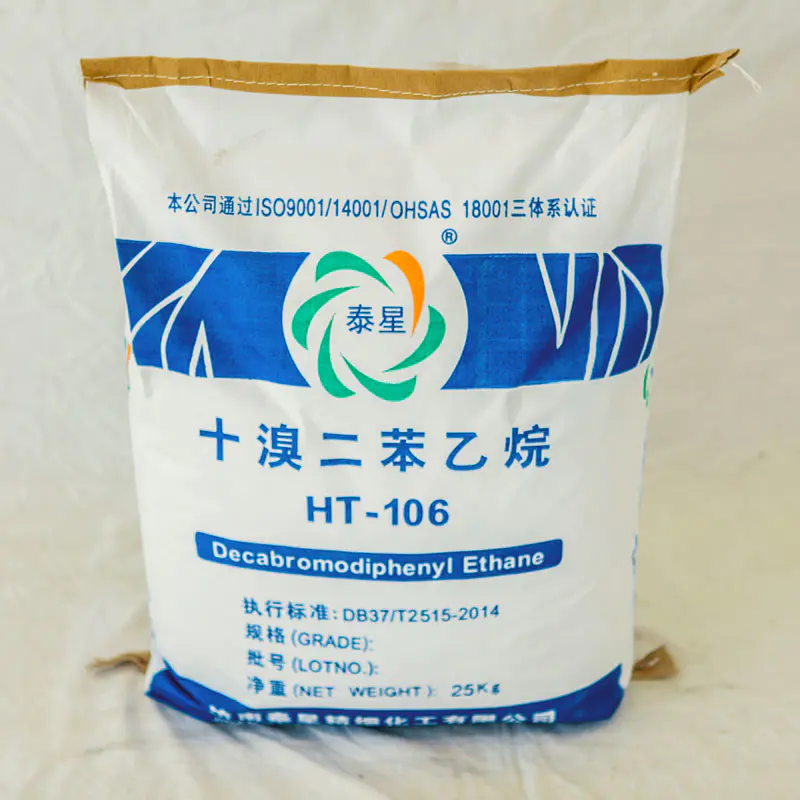
Decabromodiphenyl ethane (DBDPE), as the main high molecular weight brominated flame retardant worldwide, is not freely available for global application, but is constrained by a complex and dynamically evolving regional chemical regulatory framework. The key to understanding its compliance lies not in a simple binary list of "prohibited" or "allowed", but in clarifying what scientific evaluation conclusions different jurisdictions are based on, what legal tools are used, and what specific product areas have imposed what restrictions. This article aims to provide a global compliance map analysis based on current regulations and scientific controversies.
Firstly, a fundamental fact must be clarified: DBDPE has not been included in the list of globally banned or severely restricted chemicals such as the Stockholm Convention or the Rotterdam Convention. This means that there is no globally unified ban.
However, this does not mean that it can be used freely. Based on the "precautionary principle" and the concept of "chemical registration, evaluation, authorization, and restriction", major developed economies have established strict regional regulatory systems for it. The core concerns of regulation focus on its potential environmental persistence, bioaccumulation, long-distance migration ability, and toxicity (PBT/vPvB properties).
The EU has established a three-dimensional regulatory network for DBDPE through REACH regulations and RoHS directives.
·Restrictions and authorizations under REACH regulation:
·Annex XVII: Currently, DBDPE is not directly included in the list of restricted substances. This means that there are no unified concentration limits or usage bans set for it within the European Union.
·Candidate List of Substances of Very High Concern (SVHC): This is the key. DBDPE has been officially included in the SVHC candidate list due to concerns about its potential environmental persistence and bioaccumulation (PBT/vPvB). This triggers the following obligations:
·Information transmission obligation: If the DBDPE content in the product is greater than 0.1% (weight percentage), the supplier must provide safe use information to downstream users and consumers.
·SCIP Notification: Starting from January 5, 2021, items containing SVHC (concentration>0.1%) are required to submit information to the SCIP database of the European Chemicals Agency (ECHA).
·Possible future authorization: Inclusion in the candidate list is the first step towards being included in the "Authorization List (Annex XIV)" in the future. Once included in the authorization list, after the 'sunset date', it will not be allowed to be placed in the EU market unless authorized for a specific purpose.
·RoHS Directive (2011/65/EU):
·This directive restricts specific harmful substances in electronic and electrical equipment. At present, DBDPE is not included in the RoHS restricted substance list (it is restricted to polybrominated diphenyl ethers such as DecaBDE, which are different substances from DBDPE). However, it should be noted that some customers or specific eco labels may proactively request bromine free based on the precautionary principle.
·Key conclusion: DBDPE is not universally banned in the European Union, but is in a state of "high attention, strict monitoring, and information transparency" due to its SVHC status. Using it incurs compliance costs for supply chain information transmission and faces policy risks of further restrictions in the future.
The United States and Canada have not implemented a unified federal ban on DBDPE, and regulation is more decentralized.
·United States:
·At the federal level (TSCA): Under the Toxic Substances Control Act (TSCA) in the United States, DBDPE is a legally registered and usable chemical. The US Environmental Protection Agency (EPA) has not issued a ban on its use.
·At the state level: This is where the risk lies. Individual states (such as Washington, California, etc.) may review or restrict certain brominated flame retardants based on their more aggressive chemical management laws. It is necessary to closely monitor the specific regulations in the state where the target market is located.
·Voluntary market elimination: Driven by consumer pressure and brand environmental policies (such as substance restriction lists from companies like Apple and Dell), many high-end electronic product markets have voluntarily eliminated brominated flame retardants, including DBDPE.
·Canada:
·DBDPE has been included in the domestic substance list under the Canadian Environmental Protection Act (CEPA) and designated as a substance that requires further assessment of potential ecological risks. There is currently no nationwide ban on its use.
·Norway: As a member of the European Economic Area, it complies with the REACH regulation. In addition, its Consumer Goods Ban (PoHS) has stricter requirements for various harmful substances, but currently DBDPE is not included in the PoHS ban.
·Switzerland: Its Chemical Risk Management Regulation (ORRChem) is highly aligned with EU REACH, and DBDPE is also considered a substance of concern.
·South Korea: K-REACH regulation is as strict as the European Union. DBDPE, as an existing substance, is required to fulfill registration obligations and is subject to regulatory attention due to its PBT properties.
·China:
·There is currently no nationwide ban on DBDPE. Its production and use must comply with the relevant requirements of China's new chemical substance environmental management and hazardous chemical management.
·Please note that China's "Regulations on the Restriction of Hazardous Substances in Electrical and Electronic Products" (RoHS) currently restrict polybrominated biphenyls and polybrominated diphenyl ethers, excluding DBDPE. However, some high-end products or export-oriented enterprises may impose their own restrictions based on supply chain requirements.
The core of global regulatory trends revolves around the evaluation of DBDPE PBT/vPvB properties. The controversy between the scientific community and regulatory agencies lies in:
·Evidence weight: There is sometimes a gap between laboratory research and real environmental monitoring data.
·Degradation products: The degradation behavior of DBDPE in the environment and the toxicity of the products are key uncertainties in the evaluation.
·The availability and safety of alternatives: Regulatory decisions need to weigh the potential risks of using alternative substances (such as other flame retardants that have not been fully evaluated) to ban DBDPE.
This scientific uncertainty is the main reason for the inconsistent regulatory measures among countries. The EU adopts "risk-based preventive management", while the United States adopts more "evidence-based reactive management".
1. Precise market analysis: Clarify which country or region your product will ultimately be sold to, and conduct in-depth research on the specific regulations of that region (not only at the national level, but also at the state/provincial level).
2. Supply chain transparency: Establish a comprehensive material information transmission system to ensure compliance with EU SCIP notification and other information transmission requirements.
3. Technical reserves and alternative solution development: Given the policy risks of DBDPE in the EU and other regions (SVHC may develop into authorized substances), actively developing and evaluating halogen-free flame retardants (such as phosphorus nitrogen series, metal hydroxides) or more environmentally friendly bromine based alternatives is a strategic choice to ensure business sustainability.
4. Proactive compliance and certification: Consider obtaining certifications such as "T Ü V S Ü D Halogen Free Certification" and "IEC 61249-2-21 Halogen Free Standard Compliance Statement" to proactively meet high-end market and customer requirements and exceed basic regulatory limitations.
The global restricted map of DBDPE is a "mosaic" rather than a single color canvas. Its current core restricted area is in the European Union, which is not a ban, but a "strengthened supervision and information control" achieved through the REACH SVHC list. It can still be legally used in the United States, Canada, China, and other places, but caution should be taken against local regulations and spontaneous market elimination trends.
Therefore, regarding which countries and regions restrict the use of DBDPE? ”The most professional answer to this question is that DBDPE is regulated globally based on differentiated risk assessment and prevention principles. The current strictest regulatory framework is in the European Union, with core requirements of information transparency and supply chain communication; In other major markets, although there is no universal ban, attention should be paid to dynamic policies and customer specific requirements. A wise strategy is to conduct compliance assessments based on the target market and prepare technically for future regulatory tightening.Does your product face complex global market compliance challenges? We can provide you with in-depth interpretation of DBDPE regulations, compliance assessment, and technical and economic analysis of halogen-free alternative solutions for specific target countries/regions, ensuring that your product operates smoothly in the global market.