Shandong Taixing Advanced Material Co., Ltd.
News

What Is the Maximum Amount of Aluminum Hydroxide Added to Epoxy Resin?

2026-03-25 0 Leave me a message

In the global mainstream technology route of halogen-free flame retardant, low smoke and non-toxic, and insulation filling of epoxy resin, aluminum hydroxide (ATH) has become the preferred inorganic flame retardant filler in electronic sealing, casting, copper-clad laminates, composite materials, insulation components and other fields due to its comprehensive advantages of controllable cost, flame retardant and smoke suppression, electrical insulation and processing friendliness. The most common core question raised by global material companies in formula development is: What is the maximum amount of aluminum hydroxide that can be added to epoxy resin systems?


Ⅰ.Core conclusion: Range of addition amount of aluminum hydroxide in epoxy resin

Under industrial production conditions that meet normal mixing, defoaming, pouring/casting/forming, and do not crack or peel off after curing, and meet mechanical and insulation performance standards:

1. Conventional unmodified aluminum hydroxide: The maximum practical addition amount is 50% -65 wt% (mass fraction);

2. Silane/titanate modification+particle size graded aluminum hydroxide: the practical maximum addition amount can reach 70% -82 wt%;

3. Laboratory extreme optimization system: The theoretical upper limit can approach 85 wt%, but it is only applicable to special processes and does not have stability for large-scale production.


Simply put: ordinary formula ≤ 65%; Modified and optimized formula 70% -82%; The extreme formula does not exceed 85%. This is the globally recognized safe, stable, and mass-produced addition limit for epoxy aluminum hydroxide systems.


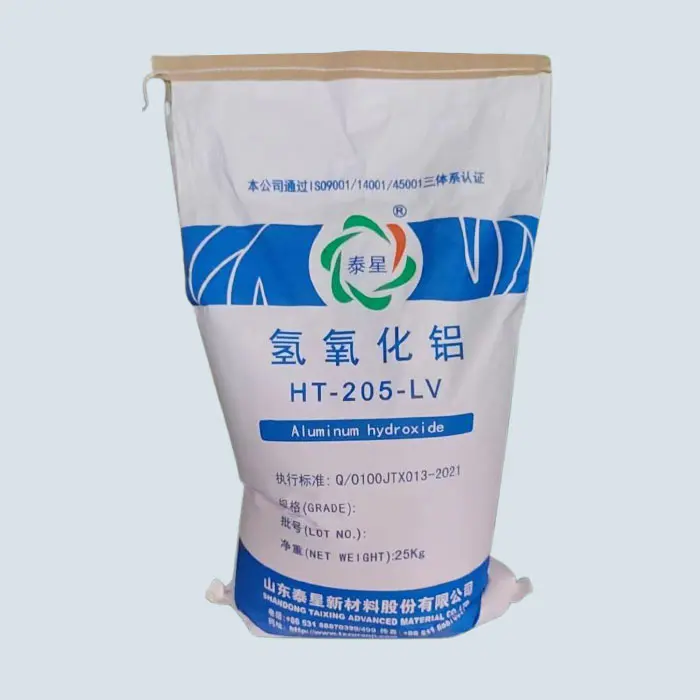
Aluminum Hydroxide


Ⅱ.The four key constraints that determine the maximum addition amount

The higher the amount of aluminum hydroxide added, the better. Breaking the upper limit will directly lead to system scrap, processing failure, and performance collapse. The four major constraints collectively define the 'maximum additive red line'.

1. Viscosity constraint: Absolute upper limit of processing fluidity

Epoxy resin itself has a certain basic viscosity, and as an inorganic powder, the higher the amount of aluminum hydroxide added, the exponential increase in system viscosity.

-Over 65%: The system becomes viscous, difficult to stir, and bubbles cannot be expelled;

-Over 75%: Loss of self leveling, pouring, and casting capabilities, unable to adapt to automated dispensing, vacuum sealing, and mold forming;

-More than 82%: The resin cannot completely wet the surface of the filler, resulting in "dry powder agglomeration and dry agglomeration", completely losing its processability.


Viscosity is the first threshold that determines the maximum addition amount and is also the core control indicator for mass production in the global electronics, electrical, and composite materials industries.


2. Mechanical performance constraints: Balance boundary between strength and toughness

Aluminum hydroxide is a rigid inorganic particle, and excessive addition can damage the cross-linked network of epoxy resin, resulting in:

-The impact strength and elongation at break have significantly decreased, making the material brittle and prone to cracking;

-The adhesive strength decreases, and the bonding strength with the substrate and components is insufficient;

-Mismatch in thermal expansion coefficient under thermal shock, resulting in warping and detachment.


Industrial optimal balance point: Under the premise of meeting UL94 V-0 flame retardancy, the addition amount should be controlled at 55% -70%, which can balance flame retardancy, strength, toughness, and dimensional stability.


3. Interface compatibility constraint: underlying logic of dispersion and wetting

Unmodified aluminum hydroxide has multiple hydroxyl groups on its surface, strong polarity, and poor compatibility with epoxy resin. Under high addition, it is prone to:

-Form a secondary reunion, resulting in internal defects;

-The bonding force between filler and resin interface is weak, and stress is concentrated;

-The insulation performance and voltage resistance of the cured material decrease.


By modifying with silane coupling agents and coating with super dispersants, the interfacial compatibility can be significantly improved, increasing the maximum addition amount from 65% to 70% -82%.


4. Process constraints: Differences in the upper limit of addition for different molding processes

The maximum addition amount for different processes with the same formula is completely different, which is a process adaptation principle that must be followed for global mass production:

-Vacuum sealing/electronic infusion: high fluidity requirements, upper limit of 60% -70%;

-Mold casting/electrical components: can be heated to reduce viscosity, with an upper limit of 70% -78%;

-Molded/Mass Molded Plastics (BMC/DMC): high shear molding, upper limit 75% -82%;

-Thin layer adhesive/bonding agent: requires low viscosity and high infiltration, with an upper limit of 40% -55%.


Ⅲ.How to break through the limit: increase the maximum addition amount from 65% to 80%+


Facing the demand for high flame retardancy, high CTI value, high insulation, and low cost in the global high-end market, four major technological means can be used to safely increase the amount of aluminum hydroxide added while maintaining system stability.

1. Surface modification of fillers: Interface engineering is the core

In situ coating of aluminum hydroxide using silane coupling agent (KH550/KH560/KH570), titanate, aluminate, and hyperbranched polymer:

-Reduce surface polarity and decrease hydrogen bonding forces between particles;

-Improve compatibility and wettability with epoxy matrix;

-Reduce agglomeration and decrease viscosity increase under high filling conditions.

After modification, the viscosity can be reduced by 30% -60% at the same addition amount, and the high filling window can be directly opened.


2. Multi particle size grading: tight packing reduces resin demand

Following the tight packing theory, a combination of large particle size, medium particle size, and small particle size (such as 40 μ m+8 μ m+1.5 μ m) is used:

-Fill the large particle gaps with small particles to reduce the porosity;

-Reduce the amount of resin wrapping and improve flowability under the same solid content;

-Achieve higher addition amount, lower viscosity, and higher density.

Grading optimization is the most cost-effective and effective solution to increase the amount of additives.


3. Low viscosity epoxy system compounding: reducing viscosity from the matrix

-Select low molecular weight epoxy, cycloaliphatic epoxy, and aliphatic epoxy;

-Compound active diluent (VOC free, participates in curing, does not migrate);

-Paired with low viscosity curing agents (polyetheramine, modified anhydride).

The lower the viscosity of the matrix, the stronger the ability to accommodate aluminum hydroxide, and the maximum addition amount can be increased by 8% -15%.


4. Efficient additives and process strengthening: dual guarantee of rheology and dispersion

-Adding efficient wetting and dispersing agents: breaking down agglomeration and reducing interfacial resistance;

-Accurate rheological additives: achieve shear thinning, static anti settlement, and high flow during construction;

-Vacuum high-speed dispersion/three roll grinding: Ensure complete depolymerization and uniform dispersion of the filler, and prevent dry powder agglomeration.


Ⅳ.Recommended addition amount for industrialization by scenario (global standard)

Based on the actual certification and mass production experience of global electronics and electrical, new energy, rail transit, and building composite materials, provide the most practical guidelines for adding quantity:

1. Electronic potting adhesive (power supply/controller/sensor): 50% -65%, V-0 flame retardant, low viscosity, high insulation;

2. Electrical casting/insulators/switch components: 65% -78%, high CTI, high flame retardancy, high mechanical strength;

3. Copper clad laminate/insulation board: 55% -70%, low smoke, high heat resistance, size stability;

4. BMC/DMC molded parts: 70% -82%, high filling, low cost, high formability;

5. Flame retardant adhesive/sealant: 40% -55%, balancing bonding strength and flame retardancy.


Ⅴ.Typical risks of excessive addition (must be avoided)

When enterprises blindly pursue high additive levels to reduce costs or improve flame retardancy, irreversible problems may arise after exceeding the upper limit:

-Viscosity explosion, unable to pour, defoam, or form;

-Cracking, warping, high brittleness, and failure due to cold and hot cycling of the cured material;

-There are many interface defects, resulting in a significant decrease in insulation performance and voltage resistance;

-Settlement and stratification of fillers, poor storage stability;

-Low yield rate, unable to pass global certifications such as UL, IEC, RoHS, etc.

Safety reminder: The amount of aluminum hydroxide added should pursue performance balance rather than extreme values.


Ⅵ.Design logic of high filling formula for global market

To meet the global customers' demands for halogen-free environmental protection, high flame retardancy, high reliability, and low cost, the optimal formula follows the following principles:

1. Set the lower limit based on the flame retardant level: UL94 V-0 usually requires ≥ 50%;

2. Set the upper limit based on the processing technology: sealing ≤ 70%, molding ≤ 82%;

3. Increasing the upper limit with modified gradation: Modification+gradation can increase the addition amount by 10% -15%;

4. Determine the final result through performance testing: viscosity, impact, adhesion, insulation, and thermal cycling all pass.


Conclusion

The maximum amount of aluminum hydroxide added to epoxy resin is the result of the combined effects of materials, formulations, processes, and properties. The practical upper limit of the conventional system is 65%, while the modified optimization system can stably reach 70% -82%, with an extreme theoretical value not exceeding 85%.


Through surface modification, particle size grading, low viscosity matrix, optimization of additives, and process strengthening, high filling, high flame retardancy, and high insulation can be achieved without sacrificing processability and mechanical properties, perfectly adapting to the strict standards and environmental requirements of global electronics, new energy, electrical, rail transit, and other fields. This is the core technological path for material enterprises to enhance product competitiveness and expand international markets.

Related News
Leave me a message
X
We use cookies to offer you a better browsing experience, analyze site traffic and personalize content. By using this site, you agree to our use of cookies. Privacy Policy
RejectAccept