Shandong Taixing Advanced Material Co., Ltd.
News

How to Choose Nylon Halogen-Free Flame Retardant?

2026-04-21 0 Leave me a message

Against the backdrop of increasingly strict environmental regulations and constantly improving standards in the electrical, electronic, and automotive industries, halogen-free flame retardancy of nylon (polyamide) materials has become an inevitable trend. However, facing numerous halogen-free flame retardant systems such as phosphorus based, nitrogen based, inorganic hydroxides, and silicon based on the market, how to make scientific and efficient choices has become a complex issue involving polymer chemistry, combustion science, rheology, and composite material interface science. This article aims to provide professional decision-making basis for the selection of nylon halogen-free flame retardants based on the mechanism of material action.


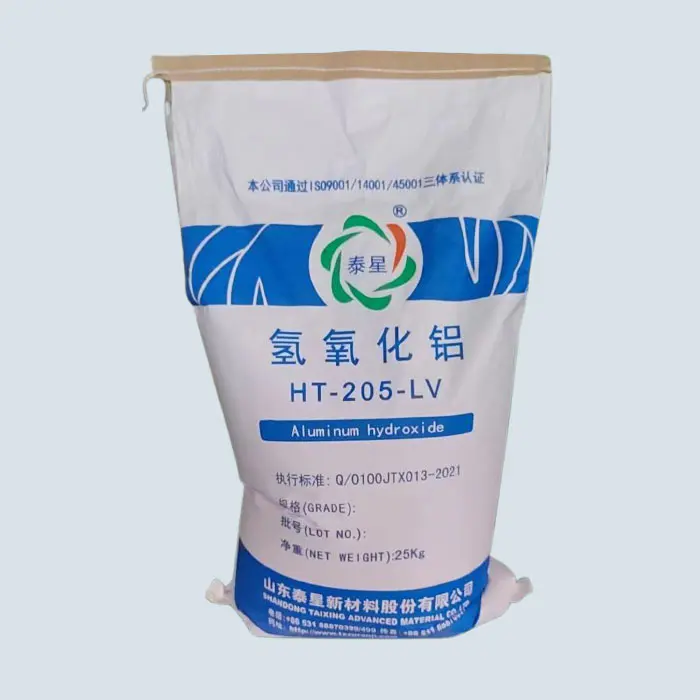
Aluminum Hydroxide


One dimensional: analysis of substrate compatibility - starting from the molecular structure of nylon

There are many types of nylon, and their chemical structure and thermal properties directly affect the selection of flame retardants.

1. Nylon type identification

·PA6 and PA66: have a high melting point (>250 ℃), a narrow processing temperature range, and require flame retardants to have excellent thermal stability (decomposition temperature should be>300 ℃). It is recommended to use highly stable organic phosphorus derivatives (such as DOPO derivatives) or metal phosphinic acid salts.

·Semi aromatic nylon (PA6T, PA9T) and high-temperature nylon: Processing temperatures often exceed 300 ℃, and ordinary phosphorus based flame retardants may decompose and fail. Special structured ultra-high temperature phosphorus nitrogen synergistic system or polysiloxane flame retardant should be selected.

·Transparent nylon and flexible nylon: There are requirements for transparency or flexibility, and flame retardants with refractive index matching, plasticizing effect, or extremely fine particle size (nanometer level) should be selected.

2. Consideration of Crystallization Behavior

The crystallinity of nylon affects the distribution and migration of flame retardants. In high crystallinity nylon (such as PA66), flame retardants are easily repelled outside the crystalline zone and concentrated in the amorphous zone, which may lead to the "wick effect" exacerbating combustion. When selecting, consideration should be given to the compatibility between flame retardants and amorphous phases of nylon, or the addition of nucleating agents to adjust the crystalline morphology.


Two dimensional: Flame retardant mechanism and efficacy evaluation - not just oxygen index

Different halogen-free flame retardants interrupt the combustion cycle through different physical and chemical pathways.

1. Gas phase flame retardant mechanism (free radical capture)

Represented by DOPO and its derivatives, free radicals such as PO · and HPO · are released during combustion, efficiently capturing H · and OH · radicals that maintain chain reactions in flames. Key indicators for selection: High gas-phase flame retardant efficiency, low required dosage for UL94 V-0 compliance (usually 15-20% in PA66), but significant impact on mechanical properties, especially impact strength.

2. Flame retardant mechanism of condensed phase

·Expanded flame retardants (IFR) and nitrogen based materials: generate a porous and stable expanded carbon layer on the combustion surface, isolating heat and oxygen. Suitable for applications that require high wire ignition temperature (GWT). However, attention should be paid to the synergistic effect of carbonization with nylon. Pure nylon has a low carbonization rate, and a flame-retardant system that can catalyze the dehydrogenation and cross-linking of nylon into charcoal should be selected.

·Metal phosphinic acid salts (such as aluminum and zinc phosphinic acid salts): have both gas-phase and condensed phase effects. Not only can it release flame-retardant free radicals, but its metal composition can also promote the formation of a carbon/ceramic layer on the surface, providing better anti drip and insulation performance, especially suitable for electrical connectors.

3. Physical mechanism of action (cooling and dilution)

·Magnesium hydroxide/aluminum (MDH/ATH): flame retardant is achieved through high filling levels (often>50%), relying on decomposition heat absorption (about 1.2-1.5 kJ/g) and the release of water vapor to dilute combustible gases. Its fatal weakness is the severe deterioration of processing fluidity and mechanical properties. Only consider low-end filled nylon that is extremely cost sensitive and has low performance requirements.

Performance core comparison parameters:

·LOI improvement efficiency: the increase in LOI per unit addition.

·The relationship between UL94 vertical combustion grade and thickness: a key economic indicator that determines the design of product wall thickness and material usage.

·Glow wire ignition temperature (GWTI): crucial for electrical safety.


Three dimensional: Balance of Composite Properties - Systems Engineering Beyond Flame Retardant

Blocking it is not advisable and a balance must be struck between multiple performance dimensions.

1. Retention rate of mechanical properties

Flame retardants, as impurities, are bound to become stress concentration points. Selection strategy:

·Surface modification: Choose flame retardants treated with coupling agents such as silane and titanate to enhance interfacial adhesion.

·Particle size and morphology optimization: The negative impact of submicron and spherical particles on tensile and impact strength is smaller than that of coarse or flake particles.

·Composite toughening: Simultaneously adding toughening agents such as maleic anhydride grafted POE to the flame retardant formula to compensate for the loss of impact strength.

2. Impact on electrical performance

Electrical and electronic applications require high CTI (compared to leakage tracking index). Some ionic flame retardants (such as substitutes for some bromides) or flame retardants with strong hygroscopicity can significantly reduce CTI. Metal phosphinate systems typically provide high CTI values (>600V).

3. Processing fluidity

A high addition amount will significantly increase the viscosity of the melt. It needs to be improved by optimizing particle size distribution (wide distribution is sometimes more advantageous than single peak distribution) and selecting flame retardants with lubricating properties (such as certain ester phosphorus series). It is necessary to conduct rheological testing (capillary or rotational rheometer), rather than relying solely on melt index judgment.

4. Appearance and long-term reliability

·Bloom and migration: Small molecule flame retardants are prone to precipitate, leading to surface stickiness and frosting. Choosing high molecular weight or reactive flame retardants (which can participate in polymerization or react with nylon end groups) is the fundamental solution.

·Color stability: Many phosphorus based flame retardants are prone to yellowing during high-temperature processing or long-term use. It is necessary to evaluate its initial chromaticity and color difference (Δ E) after thermal aging.

·Hydrolytic stability: Nylon is prone to moisture absorption. If flame retardants absorb moisture or promote hydrolysis, it will accelerate material aging. Long term damp heat aging testing (such as 85 ℃/85% RH) is required.


Conclusion

Choosing halogen-free flame retardants for nylon is not a simple "replacement" or "trial", but a systematic formulation design project based on a deep understanding of material interaction principles. The ideal flame retardant should have minimal impact on the intrinsic properties, processability, and long-term reliability of the nylon matrix under the target flame retardant efficiency, while meeting regulatory and cost constraints. The future trend is to develop multifunctional, high molecular weight, reactive halogen-free flame retardant systems, as well as intelligent solutions combined with nanotechnology and collaborative technology, to achieve multifunctional integration such as flame retardancy, reinforcement, and toughening.

Related News
Leave me a message
X
We use cookies to offer you a better browsing experience, analyze site traffic and personalize content. By using this site, you agree to our use of cookies. Privacy Policy
RejectAccept