In high-end applications such as electronic wearable devices, ultra-thin cables, and smart home transparent sheaths, thermoplastic polyurethane (TPU) is highly favored for its excellent flexibility, wear resistance, and transparency. However, the flame retardant modification of TPU thin-walled products (usually referring to wall thickness<0.8mm) faces a core contradiction: traditional flame retardants inevitably lead to surface roughness, frosting, whitening, loss of transparency, and a sharp decline in mechanical properties (especially flexibility) when the effective addition amount is reached. This problem seriously restricts the development of high-end TPU products. This article will delve into the root cause of this contradiction and systematically explain how to achieve technological breakthroughs by using specific specifications of ultrafine magnesium hydroxide (such as model MDH-III-3).
1. The physical conflict between "high addition" and "thin wall": TPU itself is flammable (LOI about 17%), and to achieve UL94 V-0 level (1.6mm) or even VTM-0 level (thin wall), the addition of halogen-free flame retardants (such as magnesium hydroxide, MDH) usually needs to be as high as 50-60wt%. In thin-walled structures, such a high proportion of rigid inorganic particles severely damages the continuous phase structure of TPU as an elastomer, resulting in the product becoming hard, brittle, and prone to cracking.
2. Strict requirements for surface appearance: The components of high-end consumer electronics products require a smooth surface like silk, no defects, and uniform color. Ordinary MDH has a large particle size (>5μm) and a wide distribution, which easily forms "floating fibers", "pitting" and "flow marks" on the surface during extrusion or injection molding. Its high surface area can cause easy migration and frosting, seriously affecting the appearance and touch.
3. The contradiction between transparency and haze: Many TPU thin-walled applications require a certain degree of transparency or semi transparency. If the size of the filled particles is larger than the visible light wavelength (0.4-0.76μm), it will cause strong light scattering, resulting in a sharp increase in haze and complete loss of transparency.
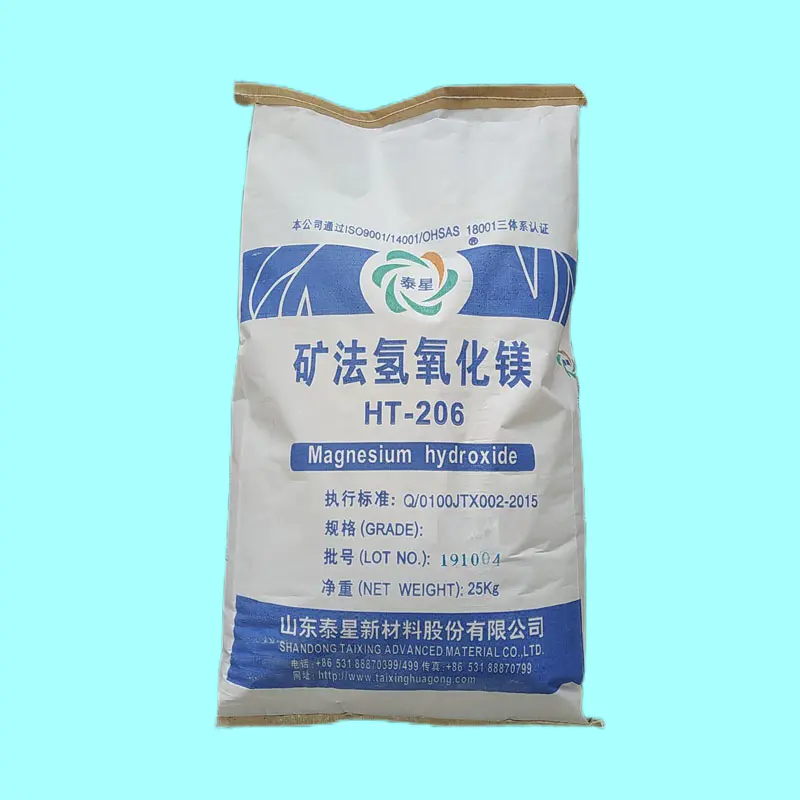
The model "MDH-III-3" represents a type of ultrafine, high-purity, and highly surface modified magnesium hydroxide product that has undergone deep engineering design. Its core design concept is aimed at addressing the above challenges:
·Ultra refinement and narrow distribution: The D50 particle size is strictly controlled within the range of 0.8-1.2 μ m (i.e. sub micron level), and the particle size distribution index (SPAN value) is extremely low. Its significance lies in:
·Reduce light scattering: A large number of particles with sizes smaller than the visible light wavelength significantly reduce the obstruction and scattering of light, allowing the product to maintain excellent translucency or at least a uniform milky white appearance while meeting flame retardant requirements, rather than a rough gray white color.
·Reduce stress concentration: Fine and uniform particles are less likely to act as stress defect points, which is beneficial for maintaining the flexibility and tensile strength of TPU.
·Advanced surface microencapsulation modification: Unlike simple encapsulation with ordinary coupling agents, MDH-III-3 uses a highly compatible polymer interface compatibilizer with TPU soft segments for graft coating. This' flexible interface layer 'has two main functions:
·Promoting dispersion: greatly reducing the van der Waals forces between MDH particles, making them more easily opened by shear forces in TPU melt, achieving nanoscale dispersion uniformity, and avoiding agglomerates from becoming surface defects and stress concentration sources.
·Stress buffering and transmission: This flexible layer can effectively transmit and dissipate external forces, minimizing the interference of rigid inorganic particles on the movement of TPU soft segment molecular chains, thus maintaining the flexible and foldable elastic feel of TPU even under ultra-high filling (such as 55wt.%).
·Extremely low impurity ion content: Through precision synthesis and purification processes, the impurity content of chloride ions, sodium ions, and other impurities is controlled at the ppm level. This is directly related to processing stability and frost resistance. Impurities are catalysts for TPU degradation (yellowing, viscosity decrease) during high-temperature processing, and are also the main cause of later migration to the surface to form "white frost". High purity MDH-III-3 eliminates this problem from the root.
·Flame retardant synergistic system: Mix MDH-III-3 with a specific proportion of nanoscale flame retardant synergistic agents (such as organic modified layered silicates). The latter can form a "nano barrier" structure in the TPU matrix, which synergizes with the gas-phase flame retardancy and endothermic decomposition of MDH, and is expected to reduce the total amount of MDH added by 5-10%, creating space for maintaining mechanical properties and appearance.
·Rheological modifier: Adding trace amounts (0.1-0.5%) of high-efficiency processing aids (such as fluoropolymers) can significantly reduce the viscosity and mold expansion of high filled TPU melt, making the melt flow smoother and more evenly in thin-walled molds, thereby eliminating flow marks and convergence lines, and improving surface smoothness.
·Low temperature shear dispersion process: Due to the highly dispersed nature of MDH-III-3, the processing core is to "prevent re aggregation" and "avoid thermal degradation". A twin-screw extruder with low to medium shear and precise temperature control should be used, with a mild screw configuration and a melting section temperature strictly controlled at 185-195℃ (far below the initial decomposition temperature of MDH at 340℃) to avoid thermal damage to TPU and surface modifiers.
·High pressure and high-speed injection molding: For thin-walled injection molding, high injection speed and high holding pressure should be used to ensure that the filler rich melt quickly and densely fills the mold cavity, reducing the difference in flow between the surface solidification layer and the core layer, thereby obtaining a mirror like appearance.
| Performance metrics | Traditional magnesium hydroxide (>5μm) filled TPU thin-walled production品 | MDH-III-3 ultrafine magnesium hydroxide filled TPU thin-walled products | Improvement principle |
| Surface finish | Rough, with obvious pockmarks and flow marks | Smooth and flat, approaching the appearance of pure TPU | Ultra fine particle size and perfect dispersion eliminate macroscopic defects |
| Haze/Transparency | Completely opaque, gray white in color | Uniform semi transparent or milky white in color, with a premium texture | Submicron particles significantly reduce visible light scattering |
| Flame retardant efficiency | A very high addition amount (>65%) is required to achieve V-0 | V-0 can be achieved with an addition of 55-60% | High dispersibility maximizes its flame retardant efficiency |
| Tensile strength/elongation | Severe deterioration and brittleness | Retention rate>70%, still has good flexibility | Flexible interface layer and ultrafine particles reduce stress concentration |
| Frost resistance | Surface white frost appears within a few weeks | Long term (>6 months) no migration or frosting | High purity and stable surface chemical bonding |
| Processing liquidity | High viscosity and poor fluidity of the melt | Good melt flowability, suitable for thin-walled forming | Spheroidization and surface lubrication treatment reduce friction |
Solving the balance problem between flame retardancy and appearance of TPU thin-walled products is not simply a matter of "replacing fillers", but a systematic engineering involving filler microstructure design, interface chemistry, rheology, and processing technology. High performance ultrafine magnesium hydroxide, represented by MDH-III-3, fundamentally overturns the dilemma of traditional inorganic flame retardants with "excessive filling, poor performance, and poor appearance" through its three core characteristics of submicron particle size, polymer flexible interface layer, and ultra-high purity.