Shandong Taixing Advanced Material Co., Ltd.
News

Difference Between Ground ATH and Regular ATH

2026-04-08 0 Leave me a message

In the field of polymer flame retardant, aluminum hydroxide (ATH) has long held a core position in the flame retardant market due to its advantages of non toxicity, smoke suppression, environmental friendliness, and relatively low cost. However, ordinary ATH prepared by traditional precipitation method often exposes limitations such as large filling amount, poor compatibility, and severe mechanical loss when meeting the increasingly demanding high-performance requirements of polymer materials. In recent years, the grinding ATH (also known as "modified ATH" or "ultrafine ATH") deeply processed through physical processing technology has emerged as a new force, leading an important upgrade in ATH application technology. This article will deeply analyze the essential differences between ground ATH and ordinary ATH from the professional perspectives of materials science, surface physical chemistry, and composite material interface engineering.


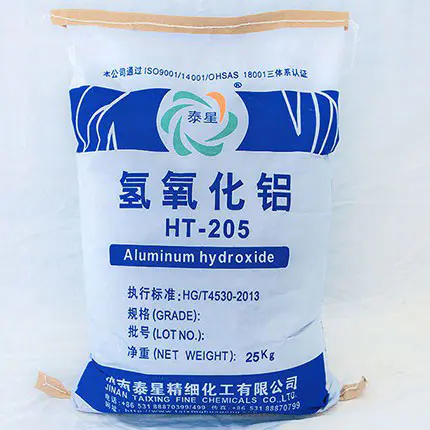
Aluminum Hydroxide


I. The essential difference between core definition and preparation process

Ordinary ATH: usually refers to aluminum hydroxide directly precipitated through wet chemical processes such as Bayer process (sodium aluminate solution decomposition) or ammonium bicarbonate process. Its crystal morphology is mostly irregular plate-like, prismatic or spherical, with a wide particle size distribution (D50 usually in the range of 10-50μm), hydrophilic surface, containing a large number of hydroxyl groups (- OH), and exhibiting strong polarity.

Grinding ATH: Using ordinary ATH as raw material, deep processing is carried out through a mechanochemical process. This process is not simply "crushing", but rather the process of achieving particle refinement, spheroidization, and reconstruction of surface physicochemical properties under high-intensity mechanical energy (such as air flow milling, ball milling, and medium milling). The key process parameters include energy input, medium selection, atmosphere control, and possible in-situ surface modification.


Ⅱ. Multidimensional Comparative Analysis of Science and Performance

1. Microstructure and morphology

·Ordinary ATH: The crystal structure is intact, but the agglomeration phenomenon is severe (due to high surface energy and strong hydrogen bonding). Rough surfaces and sharp edges can easily form stress concentration points in composite materials.

·Grinding ATH: Significant morphological regulation has been achieved.

·Particle size and distribution: The median diameter (D50) can be reduced to 1-3μm or even sub micron level, and the particle size distribution (PSD) is narrower. According to the laser diffraction analysis of ISO 13320 standard, the distribution span is significantly reduced.

·Appearance: tending towards a more regular nearly spherical or quasi spherical shape. Spheroidization not only reduces the specific surface area, but more importantly, greatly reduces the edges and corners of particles, which is the key to improving the flowability and mechanical properties of composite materials.

·Surface state: Under the action of high-energy mechanical force, the crystal structure of the particle surface undergoes partial distortion or amorphization, and the active sites increase, providing a more ideal substrate for subsequent surface modification.

2. Thermal decomposition behavior and flame retardant efficiency

The chemical composition of both is Al(OH)₃, and the main thermal decomposition reaction is consistent (endothermic decomposition begins at about 200 ℃ to form Al₂O₃ and H₂O). But micro differences lead to different behaviors:

·Ordinary ATH: The decomposition initiation and peak temperatures are relatively concentrated, and the endothermic peak is wider. Large particles may cause uneven internal heat transfer, affecting the uniformity of flame retardant efficiency.

·Grinding ATH:

·Better dispersibility results in a more uniform distribution in the matrix, more synchronized heat transfer and decomposition, and more efficient heat absorption and cooling effects.

·A larger specific surface area (which may still increase due to ultrafine refinement at the same weight after spheroidization) means a larger contact reaction area with the flame/heat source, which can dissipate heat faster and release water vapor to dilute combustible gases.

·The decomposition residue (Al₂O₃) may form a denser and more continuous protective ceramic layer due to the finer precursor particles, resulting in a better barrier effect.

3. Interface interaction with polymer matrix

This is the core that determines the final mechanical properties of composite materials.

·Ordinary ATH: Strong polar surfaces have poor compatibility with non-polar/weakly polar polymers (such as PP, PE, EVA). The interface bonding is weak, forming a 'weak boundary layer'. Under high filling levels (often requiring>60% to meet flame retardant standards), the tensile strength, impact toughness, and elongation at break of the material are severely compromised.

·Grinding ATH:

·Improved physical adaptability: Spherical particles have excellent fluidity in molten polymers, with tighter packing and reduced internal stress, lower melt viscosity (at the same filling amount), and greatly improve processing performance (such as extrusion speed and injection flowability).

·Interface binding enhancement: The surface activated by mechanical force is more prone to chemical bonding or strong adsorption with surface modifiers (such as silane, titanate, aluminate coupling agents). The surface energy of the modified ground ATH is reduced, and the wettability and entanglement with polymer chains are enhanced, achieving a transition from "physical filling" to "interface enhancement".

4. Comprehensive application performance

Performance dimension Ordinary ATH Grinding ATH (especially after surface modification)
Flame retardant efficiency Fair, can meet the standard under high filling volume Better, it may reduce the filling amount (5-15% reduction space) under the same flame retardant level
Mechanical properties Severe deterioration, high brittleness Significant retention, with much higher retention rates of impact strength and tensile strength than ordinary ATH filling systems
Machinability High melt viscosity, high torque, high energy consumption Good liquidity, processing temperature can be reduced, production capacity can be increased, and equipment wear can be reduced
Product appearance Surface roughness, low glossiness Smooth surface, delicate touch, increased glossiness, conducive to coloring
Electrical properties Due to moisture absorption and impurities, the volume resistivity is unstable More stable, especially suitable for fields with high electrical performance requirements such as wires and cables


Ⅲ. Conclusion

Grinding ATH is not a simple substitute for ordinary ATH, but a high-performance flame retardant material that achieves integrated design of structure morphology surface through advanced mechanochemical processes. Its core value lies in:

1. The inherent contradiction between high filling and processing flowability, as well as mechanical properties, has been resolved through shape optimization (ultra refinement, spheroidization).

2. By surface activation and modification, the interface adhesion with the polymer matrix has been fundamentally improved, transforming the "inert filler" into a "functional enhancing component".

3. By improving the uniformity and effectiveness of flame retardant efficiency, it provides the possibility for the "reduction and increase in efficiency" of halogen-free flame retardant formulas and the design of products with thinner walls or higher performance.


Related News
Leave me a message
X
We use cookies to offer you a better browsing experience, analyze site traffic and personalize content. By using this site, you agree to our use of cookies. Privacy Policy
RejectAccept