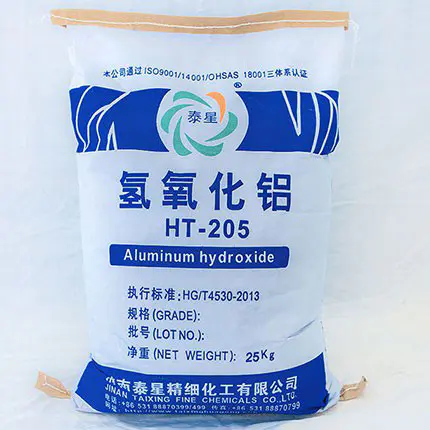
Artificial stone (including quartz stone and solid surface materials) has become the mainstream choice in the high-end decorative material market due to its excellent physical properties, rich decorative and environmental characteristics. Aluminum hydroxide (ATH) is a key functional filler and flame retardant in artificial stone formulations, and its physicochemical properties directly determine the quality and market competitiveness of the final product. Among them, whiteness and particle size distribution are the two most core and interrelated technical parameters, which profoundly affect the aesthetic value and mechanical performance of products from the dimensions of optics and physical mechanics. This article will analyze in depth the specific requirements and underlying principles of aluminum hydroxide for artificial stone from the perspective of materials science.
Whiteness is not simply the degree of whiteness, but a quantitative indicator that comprehensively measures a material's ability to diffuse visible light. Its numerical value directly determines the purity, vividness, and accuracy of subsequent coloring of artificial stone base colors.
·Whiteness value: High end artificial stone production usually requires a Hunter Whiteness of not less than 92% for aluminum hydroxide, with an ideal value of over 94%. Every one percentage point increase in whiteness is crucial for improving the color of the final product.
·Hue control: High quality ATH should present a pure neutral white color, avoiding yellowing (positive b-value) or blurriness (negative b-value). Hue deviation can reveal batch color differences or affect the color rendering effect of the color powder when applied over a large area.
Whiteness is essentially a reflection of the optical behavior of powder surfaces:
·Reflection and scattering: High whiteness originates from the efficient and uniform diffuse reflection (scattering) of incident visible light (wavelength approximately 400-700 nm) by aluminum hydroxide particles, rather than specular reflection or absorption. This requires the material itself to have extremely high chemical purity.
·Key impurity control: Trace colored metal ions are the "enemy" of whiteness.
·Iron (Fe₂O₃): is the most critical limiting impurity, with a content typically below 30 ppm (0.003%). Iron ions strongly absorb blue-green light, causing the material to turn yellow red.
·Other impurities such as titanium, manganese and other transition metal elements also need to be strictly controlled.
·Crystal structure and surface state: A complete and regular crystal structure is conducive to the regular scattering of light. The burning process (controlling the degree of dehydration) and surface treatment (whether contamination is introduced) during the production process have a direct impact on whiteness.
·Gray and dark base colors: unable to produce high-end products that are pure white and bright.
·Color distortion: The added color powder needs to be mixed with the "white canvas" of the base. A base with low whiteness and mixed colors can contaminate the target color, resulting in inaccurate color matching and dull colors.
·Batch color difference: Fluctuations in whiteness are one of the main reasons for visible color differences in different batches of products.
Particle size and its distribution are the core of powder engineering, determining the filling behavior, interface bonding state, and microstructure of aluminum hydroxide in resin systems.
·Typical particle size range: The median particle size (D50) of aluminum hydroxide used for artificial stones (especially quartz) is usually between 20-40 μ m. Being too coarse (>50 μ m) can easily lead to surface roughness and visible particles; Being too fine (<10 μ m) significantly increases viscosity, reduces filling amount, and may introduce defects due to agglomeration.
·Particle size distribution (PSD): More important than a single D50 value. The ideal distribution is either a "narrow distribution" or a "reasonable grading".
·Narrow distribution: Concentrated particle size is beneficial for obtaining uniform and consistent appearance and performance.
·Coarse particle effect: An appropriate amount of coarse particles can serve as a "skeleton" support, but too much or too coarse particles can become stress concentration points, reduce strength, and may form "pits" or "sand holes" after polishing.
·Surface texture and processability:
·Uniform and moderate particle size is a prerequisite for achieving a delicate and silky texture on the polished surface of artificial stone.
·Reasonable particle size distribution can optimize the rheological properties of the mixture, enabling it to have good flowability and compactness during vacuum vibration compression, avoiding delamination or bubbles.
For artificial stone manufacturers, when choosing aluminum hydroxide fillers, whiteness and particle size must be systematically evaluated as uncompromising core indicators:
1. Prioritize ensuring high whiteness and purity: Whiteness ≥ 92% (high-end ≥ 97%), median particle size D50=5-50μm (mainstream 8-14μm), uniform particle size distribution, and strict control of impurities are the core requirements commonly used in the global market.
2. Fine grained analysis of particle size data: not only look at D50, but also request complete particle size distribution curves (preferably D10, D50, D90, etc.), and discuss the most suitable particle size scheme with suppliers based on their own formula and process equipment characteristics.