Shandong Taixing Advanced Material Co., Ltd.
News

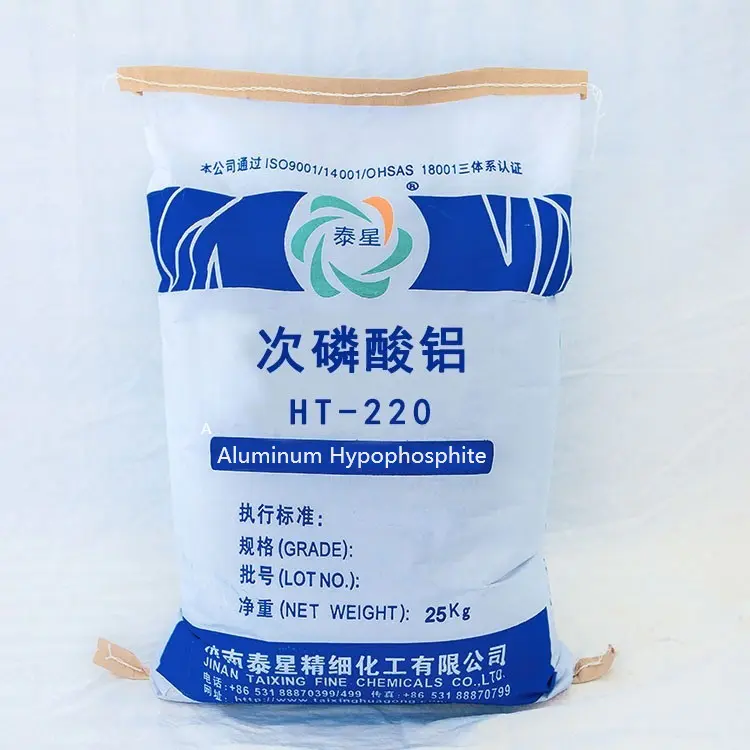
Which Polymers Are Most Suitable for Using Aluminum Hypophosphite?

2025-12-17 0 Leave me a message

In the selection of halogen-free flame retardants, aluminum hypophosphite (AHP) is not a "master key", and its excellent performance is highly dependent on the "chemical dialogue" with the polymer matrix. Understanding the principle of selective matching is the core of efficient material design. This article will systematically explain the best "partners" of AHP and the scientific logic behind them from three dimensions: polymer thermal decomposition chemistry, functional group reactivity, and carbonization ability.


I. The core principle of selection: the chemical synergistic nature of AHP flame retardant

The efficiency of AHP stems from its multi-stage chemical synergy with polymers during combustion, rather than simple physical coverage. This collaboration requires polymers to have specific 'reaction interfaces', mainly reflected in:

1. Catalytic carbonization interface: The polymer backbone should contain active functional groups that can be decomposed by AHP to produce phosphoric acid/metaphoric acid (strong Lewis acid) and catalyze dehydration, crosslinking, and aromatization.

2. Thermal stability matching: The thermal decomposition temperature of the polymer needs to overlap well with the decomposition temperature of AHP (starting from~300-350 ℃) to ensure that the flame retardant reaction is accurately triggered at critical stages.

3. Gas phase free radical supply: The type and magnitude of free radicals generated during polymer combustion can undergo efficient quenching reactions with PO · free radicals released by AHP.

Based on the above principles, the adaptability of polymers to AHP can be clearly divided into three tiers.


Aluminum Hypophosphite


II. Best matching polymer: Strong chemical synergy team

This type of polymer is a perfect match for AHP and can achieve the highest flame retardant level with the lowest addition amount.

1. Polyamide (PA, especially PA6 and PA66)

·Structural compatibility point: The amide bond (- NH-CO -) on the main chain is the perfect reaction site.

·Collaborative mechanism:

·The acidic decomposition products of AHP can efficiently catalyze the dehydration of amide bonds, form double bonds and further crosslink, generating an expanded and dense nitrogen carbon layer rich in C=N and C=C structures.

·Nylon combustion itself releases nitrogen-containing free radicals, which produce excellent P-N gas-phase synergistic effects with the phosphorus based free radicals of AHP.

·Performance: UL94 V-0 can usually be achieved with an addition amount of only 18-25%, and the impact on mechanical properties is relatively controllable. PA6, due to its more regular molecular chain, usually has better carbonization properties and slightly lower additive requirements than PA66.

2. Thermoplastic polyester (PBT and PET)

·Structural compatibility point: The ester bond (- O-CO -) on the main chain is a key site sensitive to acid catalysis.

·Collaborative mechanism: AHP catalyzes the "acid hydrolysis" and dehydration crosslinking of ester bonds, promoting the formation of aromatic carbon layers. PBT is more prone to char formation than PET due to the presence of its fatty chain segments, therefore its synergistic efficiency with AHP is usually higher than PET.

·Performance: 20-28% AHP is required in PBT to achieve V-0; PET is more challenging, often requiring higher dosages or compounding with other synergists such as nitrogen-containing compounds.

3. Epoxy resin (EP)

·Structural compatibility point: a cross-linked network rich in hydroxyl and ether bonds.

·Collaborative mechanism: AHP can catalyze deep dehydration and carbonization of epoxy resin in the early stage of combustion, forming a hard and high-strength ceramic like carbon layer, effectively blocking heat and mass transfer. It exhibits excellent performance in epoxy potting materials, laminates, and composite materials.

·Performance: When added in the range of 15-30%, it can significantly improve the flame retardant level (such as achieving UL94 V-0 or higher GWIT/GWFI) while maintaining excellent electrical insulation.


III. Conditional Matching Polymer: A Tiered System Design Required

This type of polymer has weak direct chemical dialogue with AHP and requires clever introduction of a "third party" to construct complex flame retardant systems.

1. Polyolefin (PP/PE)

·Structural challenge: Pure carbon hydrogen chain, high chemical inertness, lack of polar functional groups for reaction with AHP, and almost no char formation on its own.

·Solution: AHP cannot be used alone and must be used as an acid source, compounded with carbon sources (such as pentaerythritol, PER) and gas sources (such as melamine, MEL) to form a classic expansion flame retardant system.

·System role: In the IFR system, AHP is responsible for providing the acid for catalyzing carbon formation and quenching gas-phase free radicals. The total addition amount (AHP+PER+MEL) is usually 25-30%, with AHP accounting for about 20-35%.

2. Polyurethane (PU)

·Structural characteristics: Contains amino ester bonds, urea bonds, etc., with certain reaction potential.

·Application performance: AHP can be used as an effective flame retardant in rigid PU foam or some thermoplastic PU, but its efficiency is generally lower than that in PA/PBT. Often used in combination with aluminum hydroxide, phosphorus nitrogen expansion agent, etc.


IV. Polymers that are not recommended or require careful evaluation

1. Polyvinyl chloride (PVC)

·Not recommended reason: PVC itself contains chlorine and has inherent flame retardancy. Adding AHP may result in uncontrollable interactions and low cost-effectiveness. The more commonly used smoke suppressant synergists for PVC are zinc borate, molybdenum compounds, etc.

2. High temperature polymers (such as PPS, PEEK)

·Challenge: The processing temperature is extremely high (often>300 ℃), approaching or even exceeding the initial decomposition temperature of some AHP varieties, which poses a risk of premature decomposition during processing. Specially developed high-temperature resistant AHP should be selected and subjected to rigorous process evaluation.


Conclusion: From "universal additives" to "precision chemical partners"

In summary, aluminum hypophosphite is not a universal flame retardant, but a highly selective "precision chemical tool" for polymer chemical structures. Its optimal performance is reflected in polymers that can actively and deeply chemically synergize with it, especially in the polyamide and thermoplastic polyester families.

For materials scientists and engineers, the decision of whether to use AHP and how to use it should start with a profound understanding of the molecular structural characteristics of the matrix polymer: identifying the active functional groups, evaluating their intrinsic carbonization potential, and determining whether their thermal behavior matches AHP. This selection thinking based on chemical principles is the key to achieving the highest performance at the lowest cost, and also marks an important step for flame retardant formula design to move from empiricism to rational science.Not sure if your specific polymer matrix falls within the optimal application scope of AHP? We can provide small sample formula experiments and rapid evaluation of combustion performance based on your materials, providing data-driven scientific selection recommendations for you.

Related News
Leave me a message
X
We use cookies to offer you a better browsing experience, analyze site traffic and personalize content. By using this site, you agree to our use of cookies. Privacy Policy
RejectAccept