Shandong Taixing Advanced Material Co., Ltd.
News

Expert in Smoke Suppression and Synergistic Effects of Zinc Borate Flame Retardant Systems

2026-02-03 0 Leave me a message

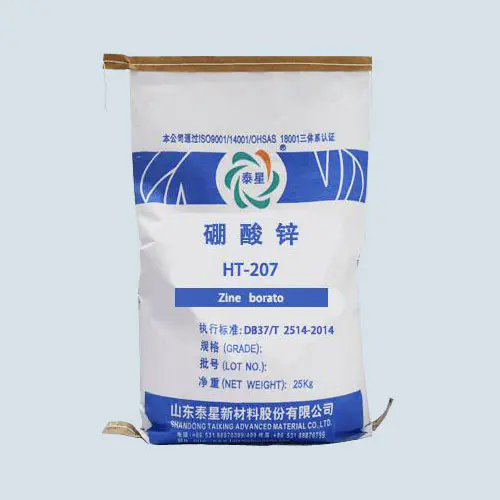
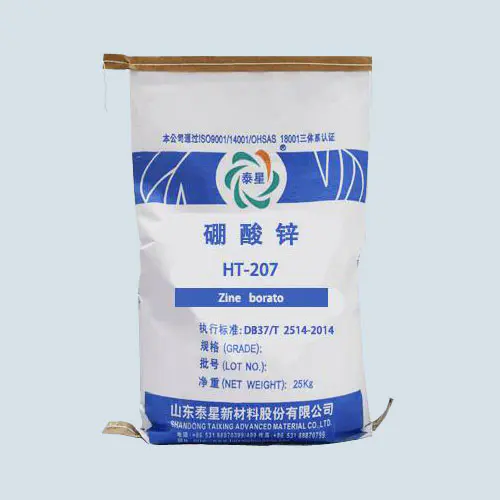
In modern flame retardant materials science, a single dimension of "flame retardancy" is no longer sufficient to meet increasingly stringent fire safety standards. Low smoke, low toxicity, and no corrosion have become equally important core indicators as flame retardancy. In this field, zinc borate (ZB) has surpassed the role of traditional "additives" and evolved into a "smoke suppression and efficiency enhancement expert" who can systematically improve the overall performance of the flame retardant system. Its value does not lie in its isolated flame retardant strength, but in the unique chemical nature that endows it with the ability to "multi-stage action and multi mechanism synergy", which can optimize the overall performance of the flame retardant system from the dimensions of time and space.


Zinc Borate


I. Breaking the myth: Zinc borate is not only an "additive", but also a "smoke suppression and efficiency enhancement system"

In general, zinc borate is often classified as a "smoke suppressant" or "flame retardant synergist". However, this positioning underestimates its system value. Its essence is a multifunctional chemical reaction platform that can initiate and guide a series of key physical and chemical processes at different stages of combustion, at the gas and condensed phase interfaces:

1. Temperature driven staged response: Its decomposition and reaction have precise temperature windows (~290 ° C for initial decomposition,~350-500 ° C for melting reaction), which can form a "relay" or "overlap" with the decomposition process of most polymers and the temperature range of mainstream flame retardants.

2. Interface dominated chemical function: Its surface is an active site for catalysis, complexation, and vitrification reactions, which can react with various decomposition products of flame retardants (such as HX, phosphorus oxides, metal oxides) to generate new phases with better performance.

3. Global optimization of system performance: The ultimate goal is to collaboratively build an expanded carbon layer protection system that forms earlier, is denser, has higher strength, and releases less smoke.


II. Core smoke suppression and efficiency enhancement mechanism: multi-stage, multi-scale defense network

The smoke suppression and efficiency enhancement of zinc borate is a dynamic system engineering that runs through the entire combustion process and can be decomposed into three continuous and collaborative stages:

Phase 1: Early cooling and dilution (~250-350 ° C)

Zinc borate releases crystal water (2ZnO·3B₂O₃·3.5H₂O→ 2ZnO·3B₂O₃ + 3.5H₂O↑).

·Efficiency enhancement: The strong heat absorption process cools the substrate, delaying the thermal decomposition of polymers and the generation of smoke precursors. The released water vapor dilutes the concentration of combustible gases and oxygen, creating a local environment that is not conducive to the generation of thick smoke (soot).

Phase 2: Condensed phase revolution - "intelligent" barrier and catalysis of molten glass layer (~350-550 ° C)

This is the golden window for it to exert its "expert" effectiveness. The dehydrated product melts to form a viscous boron zinc oxygen glassy melt.

1. Physical capture and "filtering" effect: The melt acts like a highly viscous intelligent filter, effectively capturing and encapsulating smoke particles and tar like macromolecules escaping from the polymer matrix, locking them in the condensed phase and preventing them from entering the gas phase as visible smoke from the physical source.

2. Catalytic oxidation and carbon layer enhancement: Molten borate is an excellent oxidation catalyst that can catalyze the deep oxidation of captured carbon particles at the interface, converting them into CO ₂. At the same time, it promotes polymer dehydrogenation and cross-linking, significantly improving the graphitization degree, continuity, and mechanical strength of the carbon layer, and constructing a more robust thermal insulation barrier.

Phase 3: Solid phase stabilization and long-term protection (>550 ° C)

Finally, a residual layer of zinc borate/carbon/metal oxide composite ceramics with extremely high thermal stability is formed.

·Efficiency enhancement: This residual layer provides long-lasting protection, preventing post ignition and smoldering of internal materials, ensuring the long-term reliability of smoke suppression and flame retardant effects.


III. Expert level collaborative efficiency enhancement: chemical dialogue with the three major flame retardant systems

The true 'expert' ability is reflected in its ability to initiate targeted efficiency enhancement procedures when combined with different flame retardant systems.

1. Synergistic "chemical doubling" with halogenated flame retardant systems: initiating the "chlorine/bromine zinc boron" ternary reaction

In halogenated systems such as PVC and brominated flame retardant plastics, zinc borate has been upgraded from a "synergist" to a "reactive enhancer".

·Reaction pathway: Reaction with hydrogen halide (HX): 2ZnO·3B₂O₃·3.5H₂O + 22HX → 2ZnX₂ + 6BX₃ + ...

·Efficiency enhancing essence: The generated ZnX ₂ (such as ZnCl ₂) is a more efficient Lewis acid catalyst than Sb₂O₃. It strongly catalyzes the removal of HX and cross-linking aromatization of PVC and other polymers, resulting in earlier, faster, and denser formation of the expanded carbon layer. This not only improves the flame retardant efficiency, but also achieves ultimate smoke suppression through excellent condensed phase effect, becoming a key technology for partially replacing Sb₂O₃ to achieve "antimony reduction" and "green upgrading".

2. Synergistic "spatiotemporal relay" with metal hydroxide (ATH/MDH) system

In halogen-free filling systems, the combination of zinc borate and ATH/MDH can be regarded as a classic temperature and functional relay.

·Time dimension relay: ATH (~200 ° C decomposition) and MDH (~340 ° C decomposition) absorb heat, dehydrate, and dilute in the middle and early stages. Zinc borate melts into glass and catalyzes the formation of carbon in the middle and later stages (>350 ° C). The seamless connection between the two will nearly double the effective protection range.

·Enhancement of spatial dimension: The porous and brittle metal oxide skeleton generated by ATH/MDH decomposition is infiltrated, encapsulated, and bonded by zinc borate molten glass, forming a "reinforced concrete" type composite carbon layer with ceramic characteristics. Its strength, density, and insulation properties are improved by orders of magnitude.

3. Synergistic chemical coupling with phosphorus nitrogen expansion (IFR) and red phosphorus system

In the phosphorus based flame retardant system, zinc borate plays the roles of "carbonization enhancer" and "performance stabilizer".

·Chemical coupling: Reacting with the decomposition products (P₂O₅, phosphoric acid) of red phosphorus or ammonium polyphosphate (APP) may generate boron phosphorus zinc composite glass phase. This phase has better thermal stability, fluidity, and coverage, and can form a more protective expanded carbon layer.

·Functional Enhancement: Significantly improves the weakness of the APP based IFR system's carbon layer being fragile and easily blown away by flames, and strongly suppresses the smoke that may be generated by phosphorus based flame retardancy, elevating the performance of the IFR system to new heights.


IV. From Mechanism to Performance: Quantitative Reflection of Expert Value

In advanced tests such as cone calorimeter, a flame retardant system optimized with zinc borate will present the following quantifiable excellent data:

·Leap in smoke suppression performance: The specific extinction area (SEA) and total smoke release (TSR) decrease by 30% -60%.

·Reduction of combustion intensity: The peak heat release rate (PHRR) and total heat release (THR) are significantly reduced.

·The quality of the carbon layer has improved: the residual carbon rate has increased, the carbon layer is continuous and dense, and obvious glass melting characteristics can be seen under SEM.

·Widening the safety window: The ignition time (TTI) may be extended, and the fire performance index (FPI) may be improved.


V. Implementation path: How to make "efficiency experts" work for your system

To maximize the expert value of zinc borate, it is necessary to follow the principle of system integration:

1. Precise selection: Based on the decomposition temperature of the matrix polymer and the type of main flame retardant, select the appropriate zinc borate model for the decomposition temperature range (such as standard ZB-2335 or high-temperature resistant modified varieties).

2. Scientific compounding: Based on the synergistic mechanism mentioned above, the optimal ratio with the main flame retardant is determined through experimental design (DOE). For example, partially replacing Sb₂O₃ in PVC at a ratio of 1:2 to 1:1; Use 1:5 to 1:10 as a highly effective synergist in PP/ATH system.

3. Process empowerment: Ensure that it is uniformly dispersed in the matrix with native particle size - ultimate dispersion is a prerequisite for expert efficiency. It is recommended to use high shear mixing process or pre dispersed masterbatch.

4. System validation: Final validation must be conducted through Cone Calorimeter and Smoke Density Test (ISO 5659-2/ASTM E662) to obtain authoritative data on the improvement of the comprehensive fire resistance performance of the system.


Conclusion: Define the "system engineer" for the next generation of flame retardant systems

In summary, zinc borate is far from a simple functional filler. It is an indispensable "system engineer" and "smoke suppression and efficiency expert" in the design of flame retardant materials. It uses its unique chemical behavior as a lever to leverage and optimize the working logic of the entire flame retardant system: catalytic efficiency is achieved through chemical reactions in halogen containing systems, structural enhancement is achieved through physical and chemical relays in halogen-free systems, and performance stability is achieved through chemical coupling in phosphorus nitrogen systems.

For cutting-edge material developers who pursue beyond basic flame retardancy and are committed to meeting top low smoke and low toxicity standards such as UL, EN 45545, NFPA, etc., incorporating zinc borate into formula design is no longer an option, but a necessity based on system fire prevention science. It represents an advanced design philosophy from combating flames to actively managing combustion processes, from single indicators to comprehensive safety performance.

Is your flame retardant system facing challenges such as excessive smoke density, poor residual carbon quality, or insufficient synergistic efficiency? Welcome to contact us. As a partner deeply involved in flame retardant synergistic technology, we can provide you with a complete solution, including expert selection of zinc borate products, design of compound solutions based on your specific system, and authoritative testing and verification of the full set of cone calorimeter and smoke suppression performance, to help you create the next generation of flame retardant materials with excellent performance, safety, and reliability.

Related News
Leave me a message
X
We use cookies to offer you a better browsing experience, analyze site traffic and personalize content. By using this site, you agree to our use of cookies. Privacy Policy
RejectAccept